
Chest & Lung Diseases
Pleural Effusion
Respiratory Diseases
Lung Cancer
Pulmonary Fibrosis
Pneumonia & Tuberculosis
Sleep Disorders
Asthma & Allergy Disorders
Bronchoscopy, Endobronchial Ultrasound (EBUS), Thoracoscopy
Pulmonary Rehabilitation
Interstitial Lung Disease (ILD)
COPD and Smoking-related Lung Disorders.
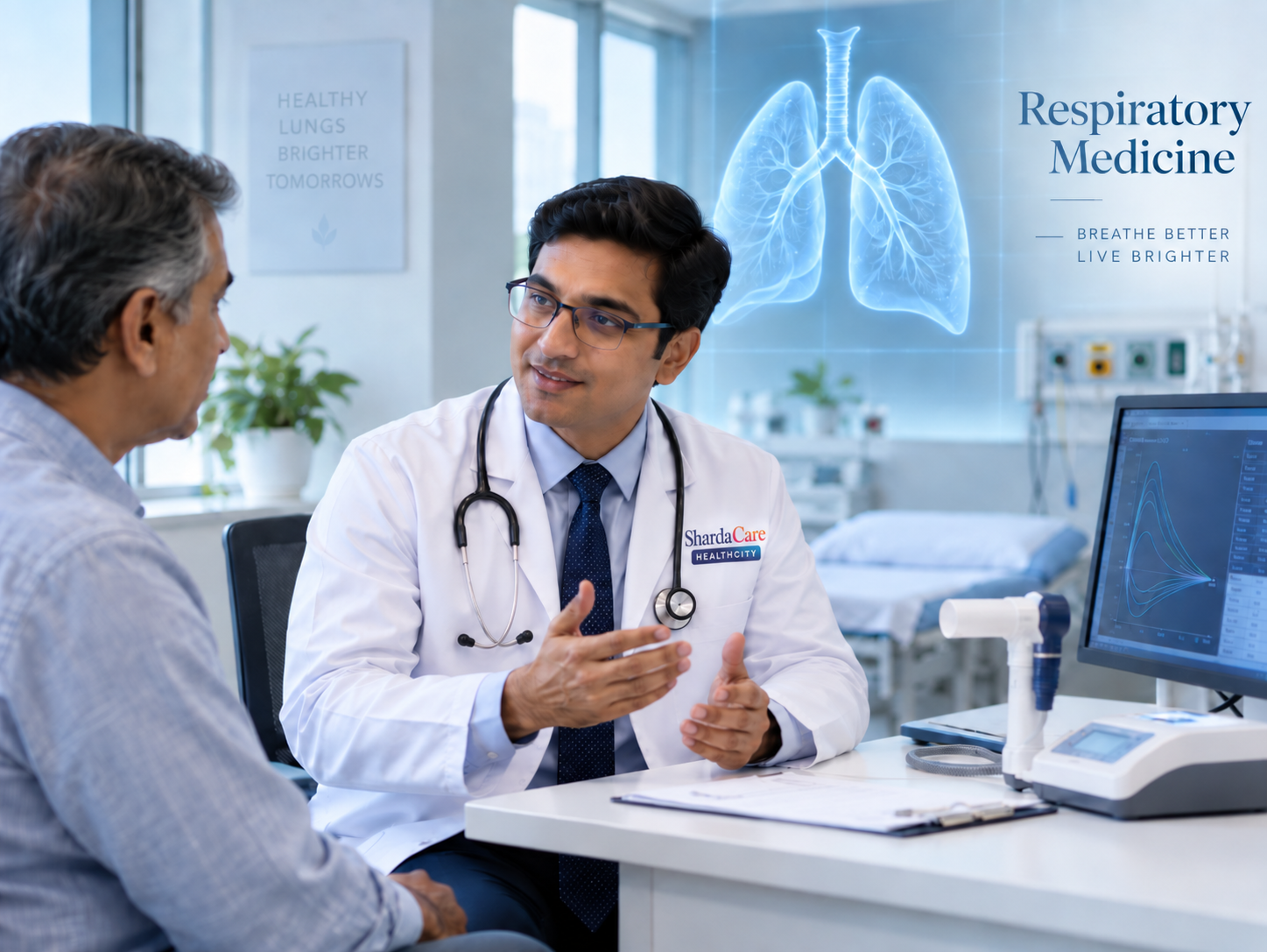
Respiratory Medicine
The Institute of Respiratory Medicine provides focused care through specialised areas designed to address different respiratory conditions and levels of complexity.
Asthma and Allergic Disorders
Asthma and allergies frequently affect the airways together. Exposure to allergens such as dust mites, pollen, mould, animal dander, pollution or occupational substances may trigger or worsen respiratory symptoms in susceptible individuals.
The Asthma and Allergic Disorders service focuses on evaluating the pattern, severity and triggers of symptoms so that treatment can be tailored to the individual patient.
Assessment and management may include:
Spirometry and lung-function assessment
Peak-flow monitoring
Allergy evaluation
Assessment of environmental and occupational triggers
Inhaler therapy
Nebulisation when clinically required
Allergy-control strategies
Patient education on correct inhaler technique
Immunotherapy in selected patients
Biologic therapy for appropriately selected severe asthma patients
Long-term monitoring of asthma control
Respiratory specialists also assess patients whose asthma remains uncontrolled despite regular treatment or who experience recurrent exacerbations.
Interventional Pulmonology
Interventional Pulmonology uses specialised minimally invasive procedures to evaluate and manage diseases affecting the lungs, airways and pleura.
These procedures may help obtain tissue or fluid samples, investigate abnormal imaging findings, evaluate airway obstruction or provide treatment in selected respiratory conditions.
Interventional Pulmonology Procedures
Depending on the patient's condition, procedures may include:
Flexible bronchoscopy
Rigid bronchoscopy
Endobronchial ultrasound (EBUS)
Bronchoscopic biopsy
Lung biopsy procedures
Thoracoscopy or pleuroscopy
Thoracentesis
Pleural drainage
Airway stenting
Management of airway narrowing
Foreign-body removal
Selected procedures for airway tumours
Management of pleural effusion
Procedures for pneumothorax
Bronchoscopy enables doctors to examine the airways directly using a thin flexible or rigid instrument. It can also be used to collect tissue, fluid or other samples for laboratory examination.
Endobronchial ultrasound (EBUS) combines bronchoscopy with ultrasound to assess structures and lymph nodes within the chest. It can assist in diagnosing conditions such as lung cancer, infections and other abnormalities without requiring more invasive surgical procedures in suitable cases.
The appropriate procedure is selected after reviewing the patient's symptoms, imaging results and overall medical condition.
Critical Care Medicine
Some respiratory illnesses can become severe enough to require continuous monitoring, advanced oxygen therapy or intensive care.
Respiratory and critical care specialists work together to manage patients with serious breathing problems and other life-threatening conditions.
Respiratory conditions requiring critical care may include:
Acute respiratory failure
Acute respiratory distress syndrome (ARDS)
Severe pneumonia
Severe COPD exacerbations
Life-threatening asthma attacks
Severe pulmonary infections
Sepsis associated with respiratory infection
Airway emergencies
Complications of chronic lung disease
Severe hypoxaemia or low blood oxygen
Patients requiring mechanical ventilation
Respiratory support may include conventional oxygen therapy, high-flow oxygen therapy, non-invasive ventilation such as CPAP or BiPAP and mechanical ventilation when clinically required.
Patients recovering from prolonged respiratory illness or intensive care may also require respiratory physiotherapy, rehabilitation and carefully monitored weaning from ventilatory support.
Respiratory Diagnostic Services
Accurate diagnosis is essential because cough, wheezing and breathlessness can occur in several different medical conditions.
Evaluation typically begins with a detailed medical history, physical examination and assessment of oxygen levels.
Depending on the suspected condition, diagnostic investigations may include:
Pulmonary Function Tests
Pulmonary function testing helps assess how effectively the lungs move air and may help identify conditions such as asthma, COPD and restrictive lung diseases.
Spirometry
Spirometry measures the amount of air a person can breathe in and out and how quickly air can be expelled from the lungs. It is commonly used for diagnosing and monitoring asthma and COPD.
Chest X-Ray and CT Imaging
Imaging can help identify pneumonia, lung nodules, pleural disease, pulmonary fibrosis, bronchiectasis and other structural abnormalities.
Bronchoscopy
Bronchoscopy allows specialists to examine the airways and, where needed, obtain samples for diagnosis.
Endobronchial Ultrasound
EBUS provides additional imaging from within the airways and may help evaluate lymph nodes or abnormalities within the chest.
Sputum and Laboratory Testing
Sputum and blood investigations can help identify infection, tuberculosis, inflammation, allergic conditions and other causes of respiratory symptoms.
Oxygen Assessment and Arterial Blood Gas Analysis
These tests evaluate oxygen and carbon dioxide levels and are particularly important in patients with severe respiratory disease or suspected respiratory failure.
Sleep Studies
Polysomnography and other sleep assessments may be recommended for patients with suspected obstructive sleep apnoea or other sleep-related breathing disorders.
Exercise and Functional Assessment
Tests such as the six-minute walk test can help evaluate exercise capacity, breathing difficulty and changes in oxygen levels during activity.
Respiratory Medicine Treatment and Care
Treatment is selected according to the diagnosis, disease severity, lung function, oxygen levels, associated medical conditions and individual patient requirements.
Respiratory care may include:
Inhalers and bronchodilator medicines
Inhaled anti-inflammatory treatment
Nebulisation
Antibiotic or antiviral treatment when appropriate
Anti-tubercular treatment
Allergy-management strategies
Oxygen therapy
CPAP or BiPAP
Pulmonary rehabilitation
Respiratory physiotherapy
Smoking-cessation support
Vaccination guidance
Bronchoscopic and pleural procedures
Critical respiratory care
Long-term monitoring of chronic respiratory disease
For chronic conditions such as asthma, COPD, bronchiectasis, pulmonary fibrosis and interstitial lung disease, regular follow-up helps doctors assess symptoms, lung function, response to treatment and changes in disease over time.
Get a call back from our
Health expert
Looking for an Expert
ShardaCare – Healthcity is home to some of the most eminent doctors in the world.
Book an AppointmentOur Medical Experts

Dr. Harish Kumar Verma
Director - (Pulmonary Medicine & Critical Care)
Institute of Respiratory Medicine
Experience: 18+ Years

Dr. Abhijeet Singh
Associate Director & Unit Head - (Respiratory Medicine)
Institute of Respiratory Medicine
Experience: 18+ Years

Dr. Devendra Kumar Singh
Senior Consultant - (Respiratory Medicine)
Institute of Respiratory Medicine
Experience: 20+ Years

Dr. (Prof) Sonisha Gupta
Senior Consultant - (Respiratory Medicine)
Institute of Respiratory Medicine
Experience: 22+ Years
