

Comprehensive Management of Stroke
Advanced Epilepsy Care & Seizure Disorders
Migraine & Chronic Headache Disorders
Parkinson's Disease & Movement Disorders
Multiple Sclerosis & Demyelinating Diseases
Alzheimer's Disease & Dementia Management
Neuropathy, Myopathy & Muscle Disorders
Complex Adult & Paediatric Epilepsies
Brain & Spine Infections (Meningitis, Encephalitis)
Vertigo & Balance Disorders
Neuro-critical Care & ICU Neurology
Electroencephalography (EEG) & Nerve
Conduction Studies (NCV/EMG)
Neuro-rehabilitation & Post-Stroke Recovery
Video EEG Monitoring & Presurgical Epilepsy Management
Neurosciences
Parkinson’s Disease Symptoms and Treatment Guide
23 Sept 2026
Overview
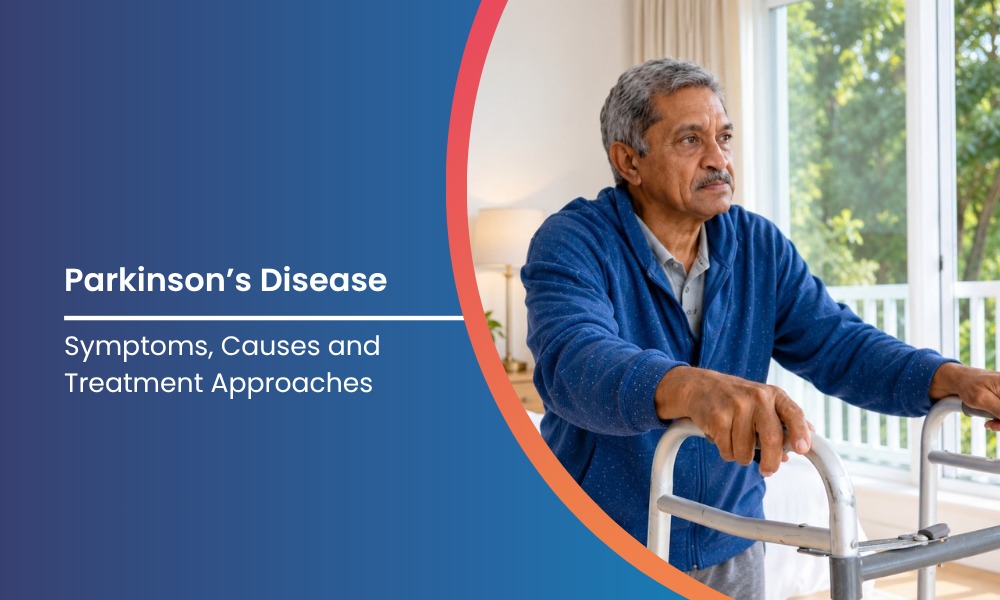
Parkinson’s disease is a progressive neurological condition that primarily affects movement, but it can also influence mood, sleep, thinking abilities, and overall quality of life. It occurs when certain nerve cells in the brain that produce dopamine gradually become damaged or lost, affecting communication between different areas responsible for movement control.
Recognising Parkinson's disease symptoms early can help individuals seek timely medical evaluation and begin appropriate management. While there is currently no cure that completely stops Parkinson’s disease progression, several treatment approaches can help manage symptoms, improve mobility, and support independence.
Parkinson’s disease is one of the most common movement disorders and requires long-term care involving neurologists, rehabilitation specialists, physiotherapists, and other healthcare professionals.
Understanding the causes, symptoms, diagnosis, and available Parkinson's treatment options can help patients and families make informed decisions about neurological care.
What Is Parkinson’s Disease?
Parkinson’s disease is a chronic neurological disorder that affects the brain’s ability to control movement.
The condition is associated with the gradual loss of dopamine-producing nerve cells in an area of the brain called the substantia nigra. Dopamine is a chemical messenger that plays an important role in coordinating smooth and controlled movements.
As dopamine levels decrease, people may develop movement-related symptoms such as:
Tremors
Slowness of movement
Muscle stiffness
Balance difficulties
However, Parkinson’s disease is not only a movement disorder. It can also involve non-motor symptoms affecting sleep, mood, digestion, thinking, and other body functions.
Understanding Parkinson’s Disease Symptoms
The symptoms of Parkinson’s disease can vary significantly from person to person. They usually develop gradually and may initially be subtle.
Early recognition of Parkinson's disease symptoms can support earlier diagnosis and management.
1. Tremors
Tremor is one of the most recognised symptoms of Parkinson’s disease.
It often begins in one hand or limb and may appear as a rhythmic shaking movement, especially when the affected body part is at rest.
Not everyone with Parkinson’s disease develops tremors, and tremors can also occur due to other conditions.
2. Slowness of Movement (Bradykinesia)
Bradykinesia refers to slowed movement.
People may notice:
Taking longer to complete everyday tasks
Difficulty starting movements
Reduced arm movement while walking
Smaller handwriting
Slower speech
This symptom can significantly affect daily activities.
3. Muscle Stiffness
Muscle stiffness or rigidity can cause:
Reduced flexibility
Discomfort during movement
Difficulty with normal body movements
Stiffness may occur in the arms, legs, neck, or other areas.
4. Balance and Posture Problems
As Parkinson’s disease progresses, some individuals may experience:
Changes in posture
Reduced balance
Increased risk of falls
Difficulty turning or walking
Balance-related symptoms require careful management because falls can affect independence and safety.
5. Changes in Walking Pattern
Walking changes may include:
Shorter steps
Difficulty initiating walking
Reduced movement of one arm
Shuffling steps
A physiotherapist can provide strategies and exercises to support mobility.
Non-Motor Symptoms of Parkinson’s Disease
Parkinson’s disease can affect many functions beyond movement.
Non-motor symptoms may include:
Sleep Problems
Some people experience:
Difficulty sleeping
Frequent waking
Excessive daytime sleepiness
Changes in sleep behaviour
Sleep problems may occur before or alongside movement symptoms.
Mood Changes
Parkinson’s disease can be associated with:
Anxiety
Depression
Reduced motivation
Emotional changes
Mental health symptoms should be discussed with a healthcare professional because support and treatment options are available.
Changes in Thinking and Memory
Some individuals may experience changes in:
Concentration
Planning
Problem-solving
Memory
Cognitive changes vary widely and may not occur in every person.
Loss of Smell
A reduced sense of smell can occur in some people with Parkinson’s disease and may appear before movement symptoms.
Digestive Problems
Constipation is a common non-motor symptom associated with Parkinson’s disease.
Speech and Swallowing Changes
Some people may develop:
Softer speech
Difficulty speaking clearly
Swallowing difficulties
Speech and swallowing therapy may help manage these concerns.
Causes and Risk Factors of Parkinson’s Disease
The exact cause of Parkinson’s disease is not fully understood. Researchers believe that a combination of genetic, environmental, and biological factors may contribute.
Age
Age is one of the strongest risk factors. Parkinson’s disease most commonly develops later in life, although younger people can also be affected.
Genetic Factors
Some cases of Parkinson’s disease are linked to genetic changes.
A family history of Parkinson’s disease may increase risk in certain individuals, although many people with Parkinson’s do not have a clear family history.
Environmental Factors
Certain environmental exposures have been studied in relation to Parkinson’s disease risk. However, the relationship between specific exposures and disease development is complex.
Brain Changes
Parkinson’s disease involves changes in specific areas of the brain responsible for movement regulation.
The reduction of dopamine-producing cells affects the brain pathways that coordinate movement.
Parkinson’s Disease and Movement Disorders
Parkinson’s disease belongs to a group of conditions known as movement disorders.
Movement disorders affect the way people move and may involve:
Excessive movements
Reduced movements
Abnormal muscle activity
Problems with coordination
A specialist evaluation is important because several movement disorders can share similar symptoms but require different management approaches.
Neurologists specialising in movement disorders assess symptoms, progression, medication response, and overall neurological function.
How Is Parkinson’s Disease Diagnosed?
There is no single test that confirms Parkinson’s disease.
Diagnosis usually involves:
Detailed medical history
Neurological examination
Assessment of movement symptoms
Review of symptom patterns
Evaluation of response to treatment
A neurologist may assess:
Tremor patterns
Muscle tone
Walking ability
Balance
Coordination
Reflexes
Speech and facial movements
Imaging and Additional Tests
Brain imaging such as MRI may sometimes be used to rule out other conditions that can cause similar symptoms.
In selected situations, additional investigations may be recommended.
The diagnosis is mainly clinical and depends on the overall pattern of symptoms.
Parkinson’s Treatment Approaches
There is currently no treatment that completely cures Parkinson’s disease. However, several approaches can help control symptoms and improve quality of life.
Parkinson's treatment is personalised based on:
Symptoms
Age
Disease stage
Lifestyle needs
Overall health
Response to previous treatments
Treatment often involves a combination of medication, rehabilitation, lifestyle support, and ongoing neurological care.
Medications for Parkinson’s Disease
Levodopa
Levodopa is one of the most commonly used medicines for Parkinson’s disease.
It is converted into dopamine in the brain and can help improve movement symptoms.
Many people experience significant benefit from levodopa, although treatment plans may require adjustment over time.
Dopamine Agonists
These medicines act on dopamine pathways and may help improve symptoms in selected patients.
The choice of medication depends on individual factors and potential side effects.
Other Medications
Additional medicines may be used to:
Improve symptom control
Manage medication-related movement changes
Address specific symptoms
Medication decisions should always be guided by a neurologist.
Rehabilitation and Supportive Therapies
Medication is only one part of Parkinson’s management.
Rehabilitation therapies can play an important role.
Physiotherapy
Physiotherapy can help with:
Balance
Strength
Walking ability
Flexibility
Fall prevention strategies
Exercise programmes are usually adapted according to the person’s abilities and symptoms.
Occupational Therapy
Occupational therapists help individuals maintain independence in daily activities.
They may provide guidance on:
Home safety
Activity modification
Assistive devices
Daily routines
Speech and Swallowing Therapy
Speech therapists can support people experiencing:
Speech difficulties
Voice changes
Swallowing problems
Advanced Parkinson’s Treatment Options
For some people with Parkinson’s disease whose symptoms are not adequately controlled with medication, advanced therapies may be considered.
Deep Brain Stimulation (DBS)
Deep brain stimulation involves placing electrodes in specific areas of the brain connected to a device that delivers controlled electrical stimulation.
DBS may help selected patients manage certain movement symptoms.
It is not suitable for everyone, and careful evaluation is required before considering this approach.
Infusion-Based Therapies
Some advanced therapies involve continuous delivery of medication to provide more consistent symptom control in selected patients.
The appropriate option depends on individual assessment.
Role of Neurology in Parkinson’s Disease Care
A neurologist plays a central role in diagnosing and managing Parkinson’s disease.
Neurological care may involve:
Confirming diagnosis
Monitoring disease progression
Adjusting medications
Managing symptoms
Coordinating rehabilitation
Addressing non-motor symptoms
A multidisciplinary approach can help address the different ways Parkinson’s disease affects daily life.
Lifestyle and Daily Management
Lifestyle choices can support overall wellbeing for people living with Parkinson’s disease.
Regular Physical Activity
Exercise can support:
Mobility
Strength
Balance
General health
Activities should be appropriate for the individual's abilities and medical condition.
Balanced Nutrition
A nutritious diet supports overall health.
Important considerations include:
Adequate protein intake
Fibre-rich foods
Sufficient fluids
Maintaining healthy weight
People taking Parkinson’s medications should discuss dietary considerations with their healthcare provider.
Maintaining Social Connections
Social engagement and meaningful activities can support emotional wellbeing.
Support groups, hobbies, and community activities may help people remain active and connected.
Managing Parkinson’s Disease Progression
Parkinson’s disease is a progressive condition, meaning symptoms may change over time.
Regular follow-up helps healthcare professionals:
Monitor changes
Adjust treatment
Manage new symptoms
Provide ongoing support
Every person experiences Parkinson’s disease differently. Some people remain independent for many years with appropriate treatment and support.
When Should You Consult a Neurologist?
A neurological consultation may be appropriate if someone experiences:
Persistent tremors
Slowed movements
Muscle stiffness
Balance problems
Changes in walking
Unexplained movement changes
Reduced sense of smell with other symptoms
Sleep or mood changes alongside movement symptoms
Early evaluation can help determine the cause of symptoms and guide appropriate management.
Frequently Asked Questions About Parkinson’s Disease
1. What are the early Parkinson's disease symptoms?
Early symptoms may include mild tremors, stiffness, slowed movements, changes in handwriting, reduced sense of smell, sleep problems, or subtle changes in walking.
2. Is Parkinson’s disease curable?
Currently, there is no cure that completely stops or reverses Parkinson’s disease. However, treatments can help manage symptoms and improve quality of life.
3. What causes Parkinson’s disease?
The exact cause is unknown. It is believed to involve a combination of genetic, biological, and environmental factors.
4. Is Parkinson’s disease only a movement disorder?
No. Parkinson’s disease can also affect sleep, mood, digestion, thinking, and other non-motor functions.
5. What is the role of movement disorder specialists?
Movement disorder specialists evaluate and manage neurological conditions affecting movement, including Parkinson’s disease.
6. What is the most common treatment for Parkinson’s disease?
Levodopa is one of the most commonly used medicines for Parkinson’s disease. Treatment plans are personalised based on symptoms and individual needs.
7. Can exercise help Parkinson’s disease?
Regular, appropriate exercise can support mobility, balance, strength, and overall wellbeing.
8. Does Parkinson’s disease affect memory?
Some people may experience changes in thinking and memory, although symptoms vary between individuals.
9. When should someone see a neurologist?
A neurologist should be consulted when persistent movement changes, tremors, stiffness, balance issues, or other concerning neurological symptoms develop.
10. Can Parkinson’s disease occur in younger people?
Yes. Although more common in older adults, Parkinson’s disease can occur in younger individuals.