


Comprehensive Management of Stroke
Advanced Epilepsy Care & Seizure Disorders
Migraine & Chronic Headache Disorders
Parkinson's Disease & Movement Disorders
Multiple Sclerosis & Demyelinating Diseases
Alzheimer's Disease & Dementia Management
Neuropathy, Myopathy & Muscle Disorders
Complex Adult & Paediatric Epilepsies
Brain & Spine Infections (Meningitis, Encephalitis)
Vertigo & Balance Disorders
Neuro-critical Care & ICU Neurology
Electroencephalography (EEG) & Nerve
Conduction Studies (NCV/EMG)
Neuro-rehabilitation & Post-Stroke Recovery
Video EEG Monitoring & Presurgical Epilepsy Management
Neurosciences
Migraine vs Headache Symptoms Causes Treatment
25 Sept 2026
Overview
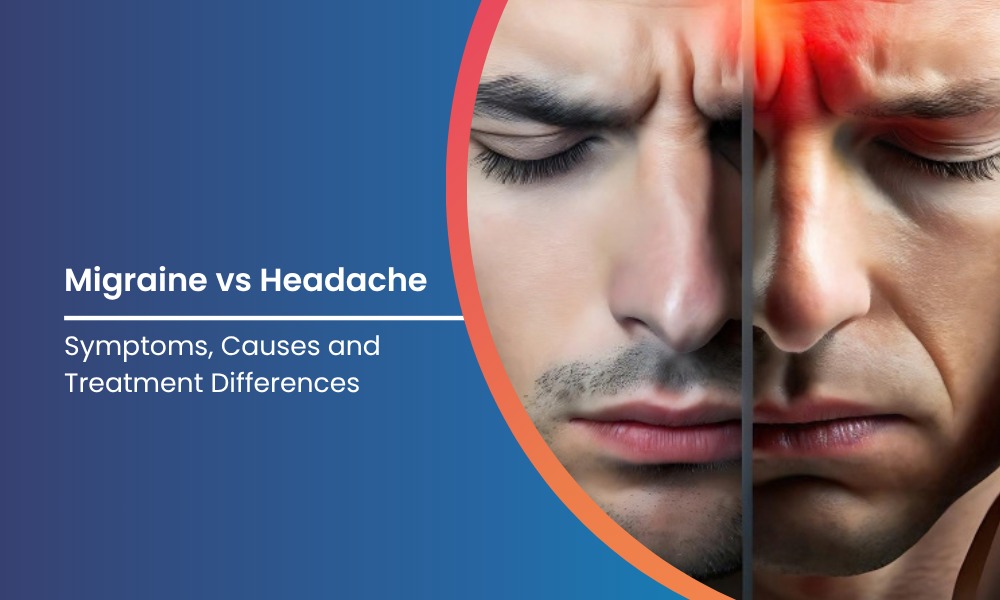
Headache is one of the most common neurological complaints. Almost everyone experiences a headache at some point, but not every headache is the same. Migraine is a specific neurological disorder that causes recurrent attacks of headache and other symptoms, while "headache" is a broad term used to describe pain or discomfort in the head.
Understanding the differences between migraine symptoms and other headache types can help patients recognise patterns and know when medical evaluation may be appropriate. Headaches can be primary conditions, such as tension-type headache, migraine or cluster headache, or they can occur as a symptom of another underlying condition. The International Classification of Headache Disorders distinguishes between primary and secondary headache disorders.
Migraines can be particularly disruptive because an attack may involve more than head pain. Nausea, vomiting and sensitivity to light or sound are common features. Some people also experience an aura characterised by temporary visual, sensory, or speech-related symptoms.
This article explains the difference between migraine and other common headaches, their symptoms and causes, how doctors diagnose them and the treatment approaches that may be considered.
Is Migraine the Same as a Headache?
No. Migraine is a type of primary headache disorder, whereas headache is a general symptom that can occur in many different conditions.
A headache can range from mild to severe and may feel like pressure, tightness, throbbing or pain. Its location, duration and associated symptoms can vary depending on the underlying cause.
Migraines have a more specific pattern. A typical migraine attack may involve moderate to severe pain that is often pulsating and may affect one side of the head. It can worsen with routine physical activity and may be accompanied by nausea, vomiting, or sensitivity to light and sound.
This distinction is important because treatment depends on the type of headache disorder.
What Is a Migraine?
Migraine is a neurological disorder characterised by recurrent attacks. It can occur with or without aura.
A typical migraine without aura involves headache attacks lasting between 4 and 72 hours when untreated or unsuccessfully treated. The pain is often unilateral, pulsating and moderate to severe. Routine physical activity may worsen the pain. Nausea or vomiting and sensitivity to light and sound are common accompanying symptoms.
Migraine is more than simply severe head pain. The disorder can affect concentration, daily activities, work, school and overall quality of life.
Some people experience symptoms before the headache begins. These may include fatigue, mood changes, food cravings, yawning, or neck stiffness. After the headache resolves, tiredness or changes in mood may continue for some time.
What Is a Headache?
A headache refers to pain or discomfort affecting the head or upper neck. It can occur for many different reasons.
Headache disorders are broadly classified into primary and secondary headaches.
Primary Headaches
A primary headache is a headache disorder in its own right rather than a symptom caused by another condition.
Common primary headache disorders include:
Migraine
Tension-type headache
Cluster headache
Other less common primary headache disorders
The International Classification of Headache Disorders classifies migraine, tension-type headache, and cluster headache as primary headache disorders.
Secondary Headaches
A secondary headache occurs because of another underlying condition or factor.
Possible causes include:
Head or neck injury
Certain infections
Blood vessel disorders
Medication overuse
Problems involving the eyes, ears, teeth or sinuses
Other neurological or systemic conditions
A new or unusual headache may therefore require medical assessment to determine its cause.
Common Migraine Symptoms
Pulsating or Throbbing Head Pain
Migraine pain is often described as pulsating or throbbing. It may affect one side of the head, although migraine can also occur on both sides.
Moderate to Severe Pain
Migraine pain can be significant enough to interfere with normal activities.
Nausea and Vomiting
Nausea is a common migraine symptom and some people may also vomit during an attack.
Sensitivity to Light and Sound
People experiencing migraine may become unusually sensitive to bright lights or sounds. They may prefer a quiet, dark environment during an attack.
Worsening With Activity
Walking, climbing stairs or other routine physical activity may make migraine pain worse.
What Is Migraine With Aura?
Some people experience migraine with aura. 'Aura' refers to temporary neurological symptoms that usually develop gradually and are typically followed by a headache.
Aura may involve:
Visual symptoms
Tingling or altered sensation
Speech or language difficulties
Other temporary neurological symptoms
Visual aura may include seeing flashing lights, zigzag patterns or areas of altered vision.
Aura symptoms are generally fully reversible. However, new neurological symptoms should not be automatically assumed to be migraine, particularly if they are unusual for the individual or occur for the first time. Other conditions can sometimes produce similar symptoms and require urgent assessment.
Common Types of Headache
Tension-Type Headache
Tension-type headache is another common primary headache disorder.
The pain is typically:
Bilateral
Pressing or tightening rather than pulsating
Mild to moderate
Not significantly worsened by routine physical activity
Nausea and vomiting are generally absent. Some people may experience sensitivity to light or sound.
Stress, fatigue and muscle tension are often reported alongside tension-type headaches, although individual triggers vary.
Cluster Headache
Cluster headache is a distinct neurological headache disorder characterised by severe attacks, typically affecting one side of the head around the eye or temple.
Attacks can occur repeatedly over time and may be associated with symptoms on the same side of the face or eye.
Because cluster headache has a distinct clinical pattern, people experiencing recurrent severe one-sided headaches should undergo appropriate medical assessment.
What Causes Migraines?
The exact cause of migraine is complex and involves changes in how the brain and nervous system function. Genetic factors can also play a role.
Migraine attacks may be associated with particular triggers, although triggers differ from person to person.
Potential triggers can include:
Lack of sleep or changes in sleep patterns
Stress
Skipping meals
Dehydration
Hormonal changes
Certain foods or drinks
Bright or flickering lights
Strong smells
Changes in routine
Not everyone with migraine has identifiable triggers. A headache diary can sometimes help patients and clinicians recognise patterns over time.
It is important not to unnecessarily restrict foods or activities based only on general lists of supposed triggers. Individual patterns are more useful when assessing migraine.
What Causes Other Headaches?
The causes of headaches vary widely.
A tension-type headache may occur as part of a primary headache disorder. Secondary headaches may be related to an underlying condition such as an infection, injury, medication effect or another medical problem.
Common everyday factors may also contribute to headaches, including:
Poor sleep
Dehydration
Missed meals
Eye strain
Stress
Changes in routine
However, a persistent or changing headache pattern should be evaluated rather than automatically attributed to lifestyle factors.
What Is a Chronic Headache?
The term chronic headache is commonly used to describe headaches that occur frequently over an extended period. It is important to understand that "chronic headache" is not always a single diagnosis.
For example, chronic migraine has specific diagnostic criteria. According to the International Classification of Headache Disorders, chronic migraine involves headache on at least 15 days per month for more than three months, with migraine features on at least eight days per month.
Frequent headaches can significantly affect daily life and may require specialist assessment to identify the underlying headache disorder.
Migraine vs Headache: How Is the Diagnosis Made?
There is no single blood test that confirms a migraine diagnosis. Diagnosis is usually based on the patient's history and symptom pattern.
A neurologist may ask about:
When the headaches started
How often do they occur
How long do they last
Where the pain occurs
What the pain feels like
Associated symptoms
Possible triggers
Medicines being used
Family history
Changes in the headache pattern
A headache diary can be useful for recording the date, duration, severity, associated symptoms and possible triggers of attacks.
When Are Tests or Brain Scans Needed?
Many primary headache disorders can be diagnosed based on a detailed medical history and neurological examination.
Brain imaging may be considered when there are features that suggest a secondary cause or when the clinical situation warrants further investigation.
Depending on the circumstances, a doctor may consider:
MRI brain
CT brain
Blood tests
Other neurological investigations
The need for testing depends on the patient's symptoms, examination findings and medical history.
Routine scans are not necessarily required for every person with a typical migraine pattern.
Migraine Treatment Options
Migraine treatment is usually tailored to the frequency and severity of attacks, associated symptoms and the individual's health.
Treatment can involve acute medications, preventive measures, and lifestyle changes.
Acute Migraine Treatment
Acute treatment is taken when a migraine attack occurs. Depending on the individual, doctors may recommend medicines to relieve pain or control associated symptoms.
Some people may require migraine-specific medicines such as triptans. The choice depends on the patient's medical history and suitability for the medicine.
Self-medication should be approached carefully because frequent use of acute headache medicines can contribute to medication-overuse headache.
Preventive Migraine Treatment
Preventive treatment may be considered when migraine attacks are frequent, prolonged, disabling or difficult to control with acute treatment.
Depending on the patient, preventive options may include:
Prescription medicines
Certain blood pressure medicines
Anti-seizure medicines
Certain antidepressant medicines
CGRP-targeted treatments
Botulinum toxin treatment for selected patients with chronic migraine
The choice of treatment should be made by a qualified healthcare professional based on the individual's diagnosis and medical history.
Treatment for Other Types of Headache
Treatment depends on the specific diagnosis.
For tension-type headaches, management may include lifestyle measures and appropriate pain relief when necessary. Persistent or frequent headaches may require assessment for contributing factors and consideration of preventive treatment.
Cluster headache requires a different treatment approach from migraine. Because the attacks can be severe and occur in clusters, specialist assessment is important.
This is why identifying the type of headache is an important first step towards appropriate treatment.
Can Headaches Become More Frequent Because of Medicines?
Yes. Frequent use of some medicines used to treat headaches can contribute to medication-overuse headache.
This can create a cycle in which headaches become increasingly frequent and the person takes more medication to manage them.
If you are regularly taking medicines for headaches, discuss the frequency and type of medicine with a healthcare professional rather than repeatedly increasing or changing treatment yourself.
Lifestyle Measures That May Help Manage Migraines
Lifestyle measures can complement medical treatment.
Maintain Regular Sleep
Try to maintain consistent sleep and wake times. Significant changes in sleep patterns can be associated with migraine in some people.
Stay Hydrated
Adequate fluid intake is important, particularly during hot weather or periods of increased physical activity.
Avoid Skipping Meals
Regular meals may help some people avoid headaches associated with prolonged periods without food.
Manage Stress
Stress can be associated with headaches and migraines in some people. Relaxation techniques, regular physical activity and appropriate support may help with overall wellbeing.
Identify Individual Triggers
A headache diary can help identify patterns without requiring unnecessary restrictions.
When Should You See a Neurologist?
A neurologist can evaluate headache and migraine disorders and help develop an appropriate treatment plan.
A consultation may be appropriate if:
Headaches are becoming more frequent
Migraine attacks interfere with daily life
Headaches are difficult to control
You regularly need pain medicines
The pattern of your headaches has changed
You are experiencing frequent headaches
You have neurological symptoms associated with headaches
You are uncertain whether your symptoms represent migraine or another headache disorder
The neurological service listed in the provided healthcare source includes both headache and migraine among conditions managed within neurology.
Headache Red Flags That Need Urgent Medical Assessment
Not every headache is caused by migraine or another primary headache disorder. Seek urgent medical attention if a headache:
Starts suddenly and reaches severe intensity very quickly
Occurs after a significant head injury
Is accompanied by new weakness or numbness
Occurs with new difficulty speaking or understanding speech
Is accompanied by loss of consciousness or a seizure
Is associated with a high fever and marked neck stiffness
Is accompanied by significant confusion
Is associated with a new and persistent change in vision
Is substantially different from previous headaches
A new neurological symptom should not automatically be attributed to migraine, especially when it is occurring for the first time.
Migraine vs Headache: Key Differences at a Glance
The simplest distinction is that headache describes a symptom while migraine describes a specific neurological disorder.
Migraines commonly has a recognisable pattern involving moderate to severe pain, often pulsating in nature, with symptoms such as nausea, sensitivity to light or sound and worsening with routine activity.
Tension-type headache tends to cause pressing or tightening pain that is usually mild to moderate and does not worsen with routine physical activity. Other headaches may have entirely different characteristics because they can result from other neurological or medical conditions.
Therefore, the most useful question is not simply whether the pain is a "headache" or a "migraine". The important question is what type of headache disorder is causing the symptoms?
Frequently Asked Questions About Migraines and Headaches
1. What is the difference between migraine and headache?
Headache is a general term for pain in the head, while migraine is a specific neurological disorder characterised by recurrent attacks with a particular headache and associated features.
2. What are the most common migraine symptoms?
Common migraine symptoms include pulsating or throbbing head pain, nausea, vomiting and sensitivity to light or sound. Pain may worsen with routine physical activity.
3. Can migraine occur without severe pain?
Yes. Migraine is a neurological disorder with several possible manifestations. Aura can sometimes occur without a subsequent headache.
4. What causes migraines?
Migraines involve complex neurological mechanisms and can have a genetic component. Individual attacks may be associated with factors such as sleep changes, stress, hormonal changes or missed meals.
5. What is a chronic headache?
'Chronic headache' refers to headaches occurring frequently over an extended period. Different chronic headache disorders exist, including chronic migraine. Chronic migraine has specific diagnostic criteria.
6. What is migraine treatment?
Migraine treatment can include medicines used during attacks, preventive medicines and lifestyle measures. The appropriate treatment depends on the individual's symptoms and medical history.
7. Can frequent painkiller use make headaches worse?
Yes. Frequent use of some headache medicines can contribute to medication-overuse headache. A doctor can help determine whether this is contributing to frequent headaches.
8. Do all headaches require an MRI?
No. Many primary headache disorders can be diagnosed through medical history and neurological examination. Imaging is considered when symptoms or examination findings suggest the need for further investigation.
9. When should I see a neurologist for a headache?
Consider a neurology consultation if headaches are frequent, worsening, difficult to control, interfere with daily activities or are associated with neurological symptoms.
10. Can migraine be prevented?
Migraine frequency can sometimes be reduced through preventive medicines, lifestyle measures and management of individual triggers. The appropriate approach depends on the person's condition.