



Comprehensive Management of Stroke
Advanced Epilepsy Care & Seizure Disorders
Migraine & Chronic Headache Disorders
Parkinson's Disease & Movement Disorders
Multiple Sclerosis & Demyelinating Diseases
Alzheimer's Disease & Dementia Management
Neuropathy, Myopathy & Muscle Disorders
Complex Adult & Paediatric Epilepsies
Brain & Spine Infections (Meningitis, Encephalitis)
Vertigo & Balance Disorders
Neuro-critical Care & ICU Neurology
Electroencephalography (EEG) & Nerve
Conduction Studies (NCV/EMG)
Neuro-rehabilitation & Post-Stroke Recovery
Video EEG Monitoring & Presurgical Epilepsy Management
Neurosciences
Memory Loss Causes Warning Signs and Neurological Care
12 Sept 2026
Overview
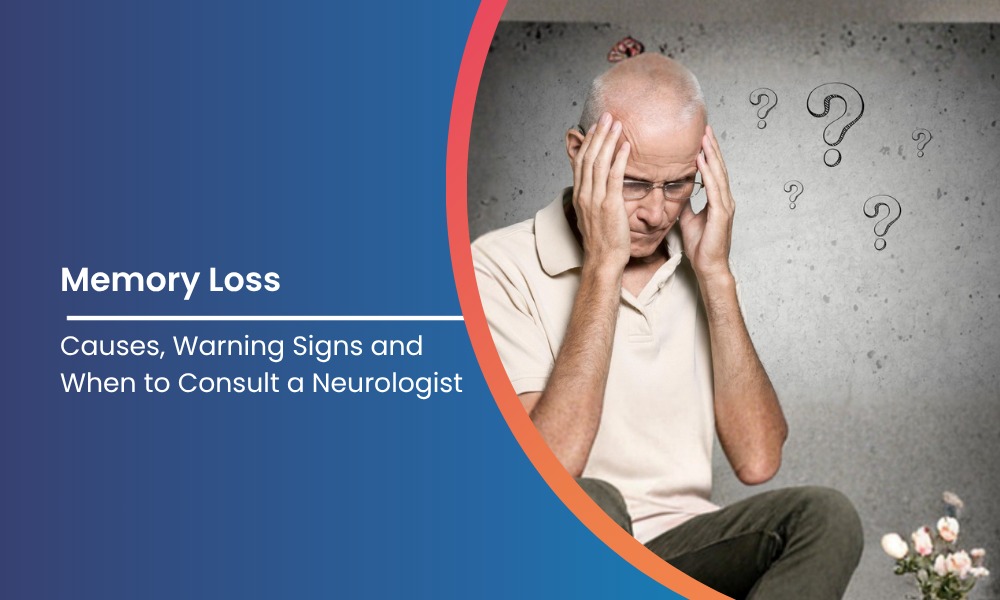
Memory loss can be an occasional and harmless experience, but persistent or worsening forgetfulness may sometimes indicate an underlying medical or neurological condition. Forgetting where you placed your keys, struggling to recall a name, or needing a little longer to remember something can happen to anyone. However, repeatedly forgetting recent conversations, becoming confused in familiar surroundings, or struggling with everyday tasks may warrant professional evaluation.
Understanding memory loss causes, recognising potential dementia symptoms, maintaining good brain health, and knowing when to seek a neurological consultation can help people take appropriate action without unnecessary fear.
Memory problems can have many causes. Stress, inadequate sleep, certain medicines, nutritional deficiencies, mood disorders, head injuries, vascular conditions, seizures, and neurological diseases can all affect memory. In some situations, addressing the underlying cause may improve cognitive function. In others, memory changes may be associated with a progressive neurological condition that requires long-term management.
A specialist in Neurology can assess memory and other functions of the nervous system and determine whether further investigation is required. Depending on the symptoms, care may also involve specialists in stroke, movement disorders, epilepsy, neurosurgery, rehabilitation, or other neurological services.
What Is Memory Loss?
Memory is a complex brain function that allows us to learn, store, and retrieve information. It involves several processes, including attention, learning, short-term memory, long-term memory, and recall.
Some changes in memory are associated with normal ageing. An older adult may occasionally forget a person's name or take longer to remember information but remain fully capable of managing everyday responsibilities.
Memory loss becomes more concerning when it is persistent, progressively worsening, or begins interfering with independence and daily activities.
For example, repeatedly forgetting important appointments, becoming unable to manage familiar finances, getting lost in a familiar area, or frequently asking the same question may indicate that a medical assessment is appropriate.
Memory impairment can occur independently or as part of a broader change in thinking, language, behaviour, movement, or other neurological functions.
Common Memory Loss Causes
There is no single explanation for memory problems. Identifying the cause is an important part of a neurological evaluation.
Age-Related Memory Changes
Normal ageing can result in subtle changes in memory and processing speed. A person may need more time to learn new information or occasionally forget a name.
These changes are different from significant cognitive impairment that interferes with everyday life.
Stress and Anxiety
Persistent stress can affect concentration and make it harder for the brain to process and retain information. Anxiety can similarly interfere with attention because a person's thoughts may be occupied by worry.
If concentration improves after the underlying stress or anxiety is addressed, perceived memory difficulties may also improve.
Poor Sleep
Sleep is important for learning, memory, concentration, and overall brain health. Inadequate or disrupted sleep may make a person feel forgetful or mentally slow.
Ongoing sleep difficulties should be discussed with a healthcare professional, particularly when they affect daytime functioning.
Depression and Other Mood Conditions
Depression can affect concentration, motivation, attention, and recall. Some people experiencing depression may report significant forgetfulness or difficulty thinking clearly.
A healthcare professional can help determine whether mood-related symptoms may be contributing to cognitive difficulties.
Medicines and Medical Conditions
Certain medicines can affect alertness, concentration, or memory. Various medical conditions may also contribute to cognitive changes.
Depending on the person's symptoms and history, a doctor may consider factors such as thyroid disorders, nutritional deficiencies, metabolic problems, medication effects, sleep disorders, or other systemic conditions.
Medication should not be stopped or changed without medical advice.
Head Injuries
A significant head injury can sometimes affect memory, attention, concentration, or other cognitive functions. Persistent cognitive changes following an injury should be evaluated by an appropriate medical professional.
In some cases, neurological assessment or brain imaging may be required.
Stroke and Vascular Conditions
A Stroke can affect areas of the brain involved in memory, attention, language, movement, and executive function. Cognitive changes following stroke may vary depending on which part of the brain has been affected.
People recovering from stroke may require coordinated neurological care and rehabilitation. Stroke Rehabilitation can form an important part of recovery when cognitive, physical, speech, or functional difficulties remain after a stroke.
Vascular risk factors such as high blood pressure, diabetes, high cholesterol, and smoking can also affect brain and blood-vessel health.
Epilepsy and Seizure-Related Memory Problems
Memory difficulties can sometimes occur in people with Epilepsy. Seizures may temporarily affect awareness and memory, while some people may experience longer-term cognitive concerns depending on the type of epilepsy and other factors.
Memory problems in someone with a seizure disorder should be evaluated in the context of their overall neurological condition, treatment, sleep, and seizure control.
Specialist Epilepsy care may be appropriate when recurrent seizures or seizure-related cognitive concerns require further evaluation.
Warning Signs of Memory Loss
Occasional forgetfulness does not necessarily indicate a neurological disorder. However, certain changes should prompt a discussion with a healthcare professional.
Potential warning signs include:
Repeatedly asking the same questions
Frequently forgetting recently learned information
Increasing difficulty following conversations
Missing important appointments despite reminders
Getting lost in familiar places
Difficulty managing familiar household activities
Problems handling finances or routine responsibilities
Increasing difficulty finding familiar words
Confusion about dates or locations
Noticeable changes in judgement
Changes in personality or behaviour
Difficulty learning familiar tasks
Increasing dependence on family members for everyday activities
The pattern and progression of symptoms are important. A person who occasionally forgets a name is different from someone whose memory difficulties are increasingly affecting independent living.
Dementia Symptoms: What Should Families Know?
Dementia symptoms vary depending on the underlying condition. Memory loss is common in some forms of dementia, but dementia can affect much more than memory.
Possible changes include:
Difficulty With Everyday Activities
A person may struggle with tasks they previously handled independently, such as paying bills, preparing familiar meals, organising appointments, or managing household activities.
Language Difficulties
Some neurological conditions can cause difficulty finding words, naming familiar objects, understanding conversations, reading, or communicating.
Changes in Judgement
Unusual decisions, difficulty evaluating situations, or changes in problem-solving ability may sometimes accompany cognitive disorders.
Behavioural Changes
Changes in personality, motivation, social behaviour, or emotional responses may occur in certain neurological conditions.
Disorientation
Repeatedly becoming confused about time, dates, or familiar locations can be a warning sign when it is new and progressive.
Movement Changes
Some neurological disorders that affect cognition may also cause tremor, stiffness, changes in walking, balance difficulties, or other movement symptoms.
When memory problems occur alongside movement symptoms, assessment by a specialist familiar with Movement Disorders may be appropriate.
When Should You Consult a Neurologist?
A neurological consultation may be appropriate when memory problems are persistent, worsening, unexplained, or interfering with everyday activities.
Consider speaking with a doctor if:
Forgetfulness is becoming increasingly frequent
Family members have noticed a significant change
Memory problems interfere with work or daily responsibilities
There are new language difficulties
Behaviour or personality has changed noticeably
Confusion is becoming more frequent
Memory problems occur with balance or movement difficulties
Symptoms developed following a head injury
Memory problems occur alongside seizures or episodes of altered awareness
There are other new neurological symptoms
A neurologist can determine whether the symptoms are consistent with a neurological condition or whether another explanation should be investigated.
A person does not need to wait until memory problems become severe before seeking medical advice.
What Happens During a Neurological Consultation?
A neurological consultation generally begins with a detailed medical history.
The doctor may ask:
When the memory problem began
Whether symptoms are becoming more frequent
Whether recent or older memories are affected
Whether daily activities have changed
Whether there are problems with language or concentration
What medicines are being taken
How well the person sleeps
Whether there is a history of stroke or head injury
Whether seizures or episodes of altered awareness have occurred
Whether there is a family history of neurological disease
A family member or caregiver may be invited to describe changes they have observed, particularly when symptoms have developed gradually.
Cognitive Assessment
A doctor may perform brief assessments of memory, attention, language, orientation, problem-solving, and other cognitive functions.
These assessments are interpreted alongside the person's history and examination rather than being used in isolation.
Neurological Examination
A neurological examination may assess movement, coordination, reflexes, sensation, balance, speech, and other nervous-system functions.
This can help determine whether memory problems occur alongside other neurological abnormalities.
Blood Tests
Depending on the clinical situation, blood tests may be recommended to investigate potentially treatable medical causes of cognitive symptoms.
Brain Imaging
MRI or CT imaging may be recommended when clinically appropriate. Imaging can help doctors assess structural changes, previous vascular injury, tumours, bleeding, or other abnormalities.
Stroke and Memory Loss
A stroke can sometimes cause memory and thinking difficulties. The effects depend on the location and extent of brain injury.
Following a stroke, a person may experience:
Difficulty remembering information
Reduced attention
Problems with planning
Language difficulties
Changes in judgement
Problems with movement or coordination
Recovery varies between individuals.
Stroke care may involve neurologists, emergency specialists, rehabilitation professionals, and other members of a multidisciplinary team.
After the acute phase, Stroke Rehabilitation may help address difficulties involving movement, communication, cognition, and everyday functioning.
Sudden memory loss accompanied by facial weakness, arm or leg weakness, difficulty speaking, severe imbalance, or other sudden neurological symptoms requires emergency medical attention because stroke can be time-sensitive.
The Role of Interventional Neuroradiology
Some neurological conditions involve abnormalities of blood vessels in or around the brain.
Interventional Neuroradiology uses image-guided minimally invasive techniques to diagnose or treat selected disorders affecting the brain and its blood vessels.
It can form part of multidisciplinary management for certain cerebrovascular conditions. Whether such an approach is appropriate depends entirely on the individual's diagnosis and clinical circumstances.
It is important to understand that most people with ordinary age-related forgetfulness do not require interventional procedures. These techniques are reserved for specific medical indications.
When Neurosurgery May Be Considered
Memory changes can occasionally occur in association with structural conditions affecting the brain.
Depending on the diagnosis, a patient may require evaluation by Neurosurgery.
Neurosurgical assessment may be relevant for selected structural brain conditions, certain tumours, hydrocephalus, vascular abnormalities, or other disorders where a surgical approach may be considered.
A memory complaint by itself does not mean that surgery is necessary. The underlying cause must first be established.
Memory Problems in Children
Memory and learning concerns can also occur in children and adolescents.
Children may experience cognitive difficulties associated with developmental conditions, neurological disorders, seizures, infections, head injuries, sleep problems, or other medical issues.
When memory, learning, attention, seizures, development, or other neurological concerns occur in a child, specialist assessment may be appropriate.
Paediatric Neurology focuses on neurological conditions affecting children and adolescents and can help evaluate age-specific neurological and developmental concerns.
Parents should discuss persistent or significant changes in learning, behaviour, development, or memory with their child's healthcare provider.
Brain Health and Memory
There is no guaranteed way to prevent every form of memory loss or dementia. However, maintaining overall health can support brain health and reduce some risk factors associated with neurological and vascular disease.
Stay Physically Active
Regular physical activity supports cardiovascular health and overall wellbeing. Maintaining healthy blood vessels is particularly important for brain health.
Choose activities that are appropriate for your age, fitness level, and medical condition.
Manage Blood Pressure, Diabetes and Cholesterol
Conditions affecting the cardiovascular system can also affect the brain.
Regular health checks and appropriate medical management can help reduce vascular risks.
Prioritise Sleep
Adequate, consistent sleep supports attention, learning, memory, and daily functioning.
Persistent sleep difficulties should be discussed with a healthcare professional.
Eat a Balanced Diet
A varied diet containing vegetables, fruits, whole grains, appropriate protein sources, and other nutrient-rich foods can support overall and cardiovascular health.
No single food, supplement, or product can guarantee protection from dementia.
Remain Socially and Mentally Active
Reading, learning new skills, hobbies, meaningful social interactions, and other mentally stimulating activities can support an active lifestyle.
These activities should be viewed as part of general wellbeing rather than a guaranteed method of preventing cognitive disease.
Avoid Smoking
Smoking is associated with cardiovascular and cerebrovascular disease and can negatively affect overall health. Avoiding tobacco is an important part of long-term health.
Limit Alcohol
Excessive alcohol consumption can affect the brain and other organs. Limiting alcohol can support general health.
Can Memory Loss Be Reversed?
Whether memory loss can improve depends on its underlying cause.
Memory difficulties associated with some medicines, nutritional deficiencies, sleep problems, mood disorders, or certain medical conditions may improve when the underlying issue is addressed.
Other causes may require long-term management rather than reversal.
Even when a neurological condition cannot currently be reversed, receiving a diagnosis can help patients and families understand the condition, plan care, address safety concerns, and access appropriate support.
Therefore, seeking a neurological consultation does not mean that dementia is present. It is an important step toward understanding why the memory problem is occurring.
How Families Can Help
Family members often notice gradual changes before the affected person recognises them.
Support can include:
Keeping a record of noticeable changes
Making a list of current medicines
Recording when symptoms started
Accompanying the person to medical appointments
Sharing relevant family medical history
Using calendars and reminders
Maintaining familiar routines
Communicating patiently and respectfully
Repeatedly testing or criticising someone's memory can increase frustration. A supportive environment is generally more helpful.
When Memory Loss Is an Emergency
Most gradual memory changes can be evaluated through a scheduled appointment.
However, sudden confusion or sudden neurological changes require urgent medical attention.
Seek emergency care if sudden memory or thinking changes occur together with symptoms such as:
Facial weakness
Weakness or numbness of an arm or leg
Difficulty speaking or understanding speech
Sudden severe headache
Sudden loss of balance
Sudden vision problems
New loss of consciousness or seizure
These symptoms can occur with serious neurological emergencies, including stroke.
Do not wait for a routine neurological consultation when symptoms appear suddenly.
Frequently Asked Questions About Memory Loss
1. What are the common memory loss causes?
Memory loss can be associated with ageing, stress, poor sleep, depression, medicines, nutritional deficiencies, medical conditions, head injuries, stroke, seizures, and neurological disorders. The underlying cause needs to be evaluated individually.
2. Is forgetting names a sign of dementia?
Occasionally forgetting a name is common. It becomes more concerning when memory problems are frequent, progressive, or accompanied by difficulty managing everyday activities, communication, judgement, or orientation.
3. What are common dementia symptoms?
Possible dementia symptoms include increasing difficulty remembering recent information, repeating questions, problems with familiar tasks, getting lost, language difficulties, impaired judgement, and changes in behaviour.
4. When should I consult a neurologist for memory loss?
A neurological consultation may be appropriate when memory problems are persistent, worsening, unexplained, or interfering with daily activities, particularly when other neurological symptoms are present.
5. Can stress cause memory problems?
Yes. Stress and anxiety can interfere with attention and concentration, making it harder to learn and recall information. Persistent or significant symptoms should still be discussed with a healthcare professional.
6. Can stroke cause memory loss?
Yes. A stroke can affect brain regions responsible for memory, attention, language, and other cognitive functions. Rehabilitation may be required depending on the individual's symptoms.
7. Can epilepsy affect memory?
Yes. Seizures and some aspects of epilepsy can be associated with memory or cognitive difficulties. The specific type and pattern of symptoms should be assessed by an appropriate neurological specialist.
8. Can memory loss occur in children?
Yes. Children can experience memory or learning difficulties for a variety of neurological, developmental, medical, and environmental reasons. Persistent concerns should be discussed with a paediatric healthcare professional and, when appropriate, a Paediatric Neurology specialist.
9. Can memory loss be reversed?
Some causes of memory problems can improve when the underlying condition is appropriately addressed. Other neurological conditions require ongoing management. A medical assessment is needed to determine the likely cause.
10. Does memory loss always mean dementia?
No. Dementia is only one possible cause of memory impairment. Sleep problems, stress, mood disorders, medicines, nutritional deficiencies, medical conditions, stroke, seizures, and other factors can also affect memory.
11. What tests are used to evaluate memory loss?
Depending on symptoms, evaluation may include medical history, cognitive assessment, neurological examination, blood tests, medication review, and brain imaging such as MRI or CT.
12. How can I support long-term brain health?
Regular physical activity, adequate sleep, a balanced diet, management of cardiovascular risk factors, avoiding smoking, limiting alcohol, and maintaining meaningful mental and social activities can support overall brain and cardiovascular health