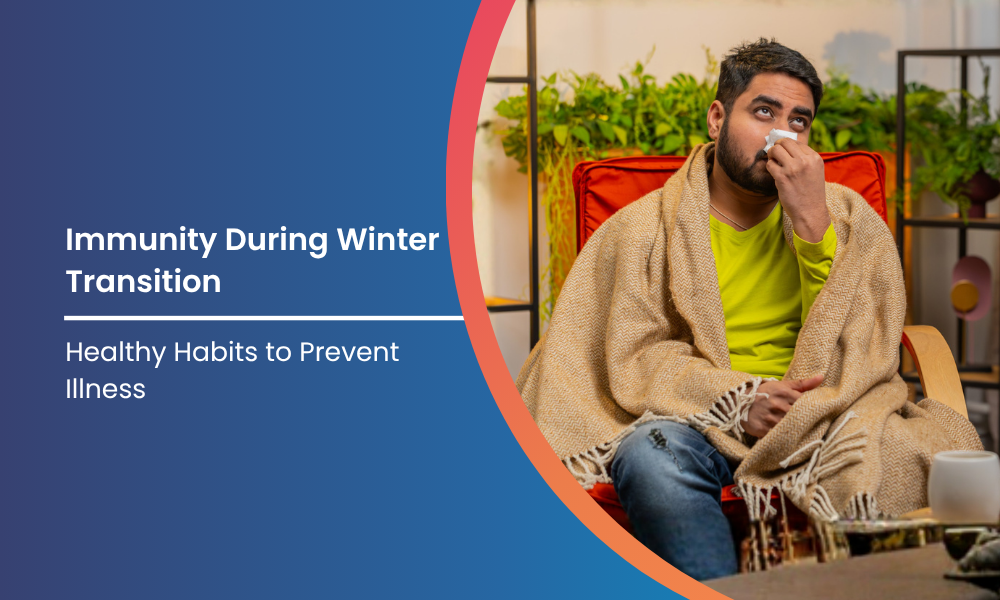
Immunity During Winter Transition Healthy Habits
Overview
Cooler mornings and changing daily routines often bring renewed concerns about coughs, colds, and seasonal infections. Families start looking for immunity-boosting tips, while workplaces and schools have more conversations about staying well.
Supporting your health during this transition doesn't require an expensive supplement routine or a special “immunity diet.” Everyday habits such as eating balanced meals, sleeping adequately, staying active, and reducing exposure to infections provide a more practical foundation.
It also helps to understand what these habits can achieve. A healthy lifestyle supports normal immune function but cannot guarantee that you will avoid illness. Vaccination and infection-prevention measures play essential roles alongside good nutrition and rest.
This guide explains how to approach seasonal illness prevention with realistic habits that fit everyday Indian households.
What Does Supporting Immunity Actually Mean?
Your immune system is a network of cells, tissues, and organs that helps protect your body against infections. Its function depends on several factors, including your age, nutritional status, underlying health conditions, and certain medicines.
The phrase “boosting immunity” can suggest that more is always better or that immunity can increase quickly. In practice, the goal is to support a well-functioning immune system.
Healthy habits help maintain overall immune health. Vaccines provide a different kind of protection by preparing the immune system to recognise specific infections. One does not replace the other.
For most people, a useful starting point is to review daily routines. Are meals regularly skipped? Is sleep consistently cut short? Are symptoms ignored because work is busy? Addressing these patterns is more useful than relying on a single seasonal remedy.
Why Infection Prevention Matters During the Seasonal Transition
Weather changes often coincide with behavioural changes. People may gather indoors more frequently or keep windows closed for longer. Respiratory viruses can spread more readily in crowded indoor spaces with poor airflow.
This makes your environment an important part of preventing seasonal illness. Improving indoor air quality and reducing close contact with someone who is unwell can help lower exposure.
Rather than treating every cough as evidence of “low immunity”, consider the wider picture: exposure to infections, daily habits, and any existing medical conditions. Repeated or prolonged symptoms deserve individual assessment rather than a self-prescribed immunity product.
1. Build Balanced Meals Around Familiar Foods
A varied diet helps provide the nutrients your body needs. You don't need to buy imported berries, costly powders, or a special winter food package.
The World Health Organization identifies adequacy, balance, moderation and diversity as the foundations of a healthy diet. This means eating enough to meet your needs, including different food groups and limiting foods high in free sugars, unhealthy fats and salt.
For a practical vegetarian meal, combine:
Vegetables such as carrots, peas, cauliflower or leafy greens.
Whole grains such as whole-wheat roti, oats, millets or brown rice.
Protein foods such as dal, rajma, chana, tofu or paneer.
Include fruit as part of your daily intake.
Nuts or seeds in portions suited to your needs.
Think about the complete meal rather than searching for a single protective ingredient. For example, vegetable dalia with curd can offer more variety than tea and biscuits alone. You can prepare a lunch of roti, dal, and vegetables with ordinary household ingredients.
If you have diabetes, kidney disease, food allergies or another condition affecting your diet, ask your clinician or dietitian how to adapt these choices.
2. Include Protein Across Your Meals
When planning winter meals, it is easy to focus on warm drinks and snacks while overlooking the main meal.
Make protein foods a deliberate part of breakfast, lunch and dinner. Vegetarian options include lentils, beans, chickpeas, soy foods, dairy products, nuts and seeds. Choose combinations that fit your appetite, preferences and prescribed diet.
Practical options include moong dal chilla for lunch or tofu with vegetables for dinner. These are meal-planning ideas, not a fixed diet chart.
Your needs will differ based on your age, activity level, and health. Someone recovering from illness may need a different plan from a healthy adult with a sedentary routine. Don't copy a high-protein diet without considering your medical circumstances.
3. Make Adequate Sleep a Regular Habit
Sleep is often the first habit sacrificed during a busy week. Late work, social commitments, and prolonged phone use can gradually reduce the time available for rest.
Adults generally need seven to nine hours of sleep each night. Individual requirements vary, and people recovering from illness may need additional rest.
Protect your sleep time with a routine you can maintain:
Choose a reasonably consistent bedtime.
Set aside enough time for sleep before your morning commitments.
Create a quiet and comfortable sleeping space.
Move unfinished tasks into a plan for the next day.
Notice whether late-night screen use is delaying bedtime.
Aim for consistency rather than a perfect night every night. If work shifts or caregiving responsibilities make regular sleep difficult, identify the changes you can realistically control.
Persistent sleep difficulties, disruptive snoring, or excessive daytime sleepiness are worth discussing with a healthcare professional.
4. Stay Active as the Weather Changes
Cooler weather can interrupt an established exercise routine. A morning walk may become less appealing, while shorter days can make it harder to fit activity around work.
Regular physical activity supports general health. WHO guidance recommends at least 150 minutes of moderate-intensity activity a week for adults, or vigorous activity or a combination of both.
Choose activities you can continue consistently. These could include walking, cycling or an appropriate home exercise routine. If outdoor conditions are unsuitable, plan an indoor alternative instead of abandoning activity altogether.
Start with what is manageable. A realistic routine that fits your week is easier to maintain than an ambitious programme that quickly becomes exhausting.
Exercise plans should account for existing medical conditions and physical limitations. If you are unwell, seek advice about when to rest and when it is appropriate to resume your usual activity.
5. Make Hand Hygiene Part of Your Routine
Healthy eating does not remove the need for infection prevention.
Wash your hands regularly with soap and water, especially before eating and after coughing, sneezing or blowing your nose. If soap and water aren't available, use hand sanitiser with at least 60% alcohol.
Cover coughs and sneezes with a tissue or your elbow. Dispose of used tissues promptly, and regularly clean frequently touched household surfaces. These measures help reduce the spread of respiratory germs.
Make these habits convenient. Keep soap available at washbasins and tissues within reach when someone is unwell. Teach children the routine through everyday practice.
At work, don't let busy schedules push basic hygiene aside. Small actions repeated throughout the day are more useful than occasional intensive cleaning while routine habits are overlooked.
6. Pay Attention to Indoor Air
Seasonal health advice often focuses on diet while overlooking shared air.
Respiratory viruses can spread through the air, especially in enclosed, crowded environments. Cleaner indoor air can help reduce exposure.
Depending on the setting, options include improving ventilation, using suitable air filtration, or choosing an outdoor gathering when conditions allow. Portable HEPA air cleaners can help improve indoor air quality.
In areas affected by outdoor pollution, decisions about opening windows should also account for local air quality. Keep a practical plan for your home or workplace rather than assuming one approach suits every day.
If a family member is unwell, consider how you use shared rooms. Reducing close contact and improving the air in those spaces can complement other precautions.
7. Review Recommended Vaccinations
An adequate diet and regular sleep cannot provide the specific protection vaccination offers.
Ask your doctor which vaccinations are appropriate for your age, medical history, and previous doses. Depending on individual circumstances and local recommendations, the discussion may include influenza vaccination and other relevant vaccines.
Vaccination can reduce the risk of severe respiratory illness. Recommendations differ by individual, so follow a clinician’s advice rather than a generic social media checklist.
A seasonal health review is a useful opportunity to bring vaccination records and ask questions. If you take medicines that affect immunity or are receiving cancer treatment, your treating team should guide the timing and suitability of vaccines.
Avoid postponing this discussion until illness is already spreading through your household.
8. Be Cautious About “Immunity Booster” Supplements
Winter marketing often presents vitamin combinations, herbal products, and drinks as essential protection against infections.
Vitamins and minerals are necessary for normal immune function. However, taking extra amounts generally doesn't help prevent infections when you already have adequate intake and no deficiency. Supplements may be appropriate when a healthcare professional identifies a nutritional need.
More is not always better. High doses can cause harm, and some supplements can interact with medicines.
Before buying a product, ask:
Is there a clear reason to take it?
Is the dose suitable for me?
Could it interact with my medicines?
Am I taking the same ingredient in several products?
Familiar foods and warm drinks can remain part of your routine if they suit you. They should not be presented as guaranteed protection or used to delay medical assessment.
9. Plan Early Care if You Have a Higher Risk
Some people need a more individual approach to seasonal infections. Older adults and people with certain chronic illnesses or treatments affecting immunity may face a higher risk of complications.
If this applies to you, ask your doctor what to do when symptoms begin. A clear plan can help you recognize when to call, whether testing is appropriate,e and how to manage your regular treatment during illness.
Keep relevant medical information accessible, including current medicines and your treating team's contact details.
Don't change prescribed medicines or start preventive treatment on your own. General immunity-boosting tips cannot replace a plan tailored to a person’s condition.
What Should You Do When Symptoms Start?
If you develop respiratory symptoms, reduce contact with others and, where possible, stay home while unwell. A well-fitting mask can offer extra protection when you can't avoid contact.
People at higher risk of severe illness should seek healthcare advice promptly rather than waiting for symptoms to become severe.
Do not start antibiotics simply because you have a cough, cold or flu-like symptoms. Antibiotics do not treat influenza viruses. A clinician can assess whether another diagnosis or treatment is relevant.
For people who need influenza antiviral treatment, starting promptly can matter. This is one reason early medical contact is particularly useful for those at increased risk of complications.
Recognize Symptoms That Need Urgent Attention
Seek urgent medical care for difficulty breathing, persistent chest pain or pressure, confusion, severe weakness or signs of significant dehydration.
In children, concerning signs include fast or difficult breathing, bluish lips, reduced alertness and dehydration. Any fever in an infant younger than 12 weeks requires prompt medical assessment.
Symptoms that improve and then return or worsen also warrant attention. These examples are not a complete list: seek care for any severe or concerning symptom.
A Practical Winter Wellness Checklist
Use the seasonal transition as a reminder to review a few everyday habits:
Plan varied meals with vegetables, whole grains and protein foods.
Protect adequate time for sleep.
Keep a manageable physical activity routine.
Practice hand hygiene and respiratory etiquette.
Consider ventilation and indoor air quality.
Review vaccination needs with your doctor.
Seek early advice if you are at higher risk and develop symptoms.
Choose one or two improvements to begin with. For example, prepare breakfast ingredients the night before or agree on a household plan for when someone develops a cough. Sustainable routines are easier to maintain when they fit your circumstances.
Frequently Asked Questions
What are the most useful immunity-boosting tips for winter?
Focus on a varied diet, adequate sleep, regular activity, and avoiding smoking. Combine these habits with recommended vaccination and measures that reduce exposure to infections. No single food or supplement guarantees protection.
Can vitamin C prevent every cold?
No. Vitamin C supports health, but supplements do not guarantee you will avoid a cold. Evidence suggests regular supplementation may modestly shorten some colds, while starting it after symptoms develop may not help.
Should everyone take an immunity supplement during winter?
No. Supplements should address an individual need. If you suspect a deficiency or struggle to meet nutritional needs, seek professional advice before starting a product.
Does a healthy lifestyle replace vaccination?
No. Healthy habits support overall immune function, while vaccines protect against specific diseases. Both contribute to prevention in different ways.
When should I consult a doctor about seasonal symptoms?
Seek advice promptly if you are at higher risk, symptoms worsen, or you are concerned about your recovery. Breathing difficulty, chest pain, confusion,n and other emergency warning signs need urgent care.
For personalized advice on seasonal health, vaccination needs,ds or persistent symptoms, consult a healthcare professional at ShardaCare – Healthcity.
This article provides general health information and does not replace individual medical advice.