Heart Valve Disease Symptoms Diagnosis and Treatment
Overview
The heart maintains continuous blood circulation throughout the body. Four valves work together to ensure blood flows in the correct direction between the heart's chambers and the major blood vessels. When these valves don't function properly, the condition is called heart valve disease.
Heart valve problems can affect the heart's ability to pump blood efficiently. Some people may have mild valve abnormalities with minimal symptoms, while others may develop significant symptoms that require advanced medical evaluation and treatment.
Heart valve disease can develop due to age-related changes, infections, congenital heart conditions or other cardiovascular factors. Early diagnosis and appropriate treatment can help manage symptoms and improve heart function.
This article explains heart valve disease symptoms, causes, diagnosis methods and available treatment options, including valve replacement surgery and other cardiac surgery approaches.
What Is Heart Valve Disease?
Heart valve disease refers to any condition that affects one or more of the heart’s four valves:
Mitral valve
Aortic valve
Tricuspid valve
Pulmonary valve
These valves open and close with each heartbeat to regulate blood movement through the heart. When a valve narrows or fails to close properly, it can disrupt blood flow.
There are two main types of valve problems:
Valve Stenosis
Valve stenosis occurs when a heart valve becomes narrowed. A narrowed valve makes it harder for blood to pass through, which may increase pressure inside the heart.
Valve Regurgitation
Valve regurgitation occurs when a valve doesn't close completely, allowing blood to flow backward. Over time, this can increase the heart's workload.
Some patients may have both narrowing and leakage affecting the same valve.
Types of Heart Valve Problems
Different heart valves can develop different conditions depending on the underlying cause.
Aortic Valve Disease
The aortic valve controls blood flow from the heart’s left ventricle into the aorta. Aortic valve disease may include aortic stenosis or aortic regurgitation.
Aortic stenosis can restrict blood flow from the heart to the body and, if left untreated, may gradually affect heart function.
Mitral Valve Disease
The mitral valve controls blood flow between the left atrium and left ventricle. Problems with this valve can cause it to leak or narrow.
Mitral valve disease may affect the heart’s ability to maintain efficient circulation and can sometimes contribute to irregular heart rhythms.
Tricuspid Valve Disease
The tricuspid valve regulates blood flow between the right atrium and right ventricle. Tricuspid valve problems may result from changes in heart structure or other cardiac conditions.
Pulmonary Valve Disease
Pulmonary valve problems are less common and may be related to congenital heart conditions or other structural abnormalities.
Heart Valve Disease Symptoms
Symptoms of heart valve disease depend on the type of valve affected, the severity of the condition and how well the heart compensates for changes in blood flow.
Some people may not experience noticeable symptoms in the early stages. As the condition progresses, symptoms may become more apparent.
Common Symptoms of Heart Valve Problems
Common heart valve disease symptoms include:
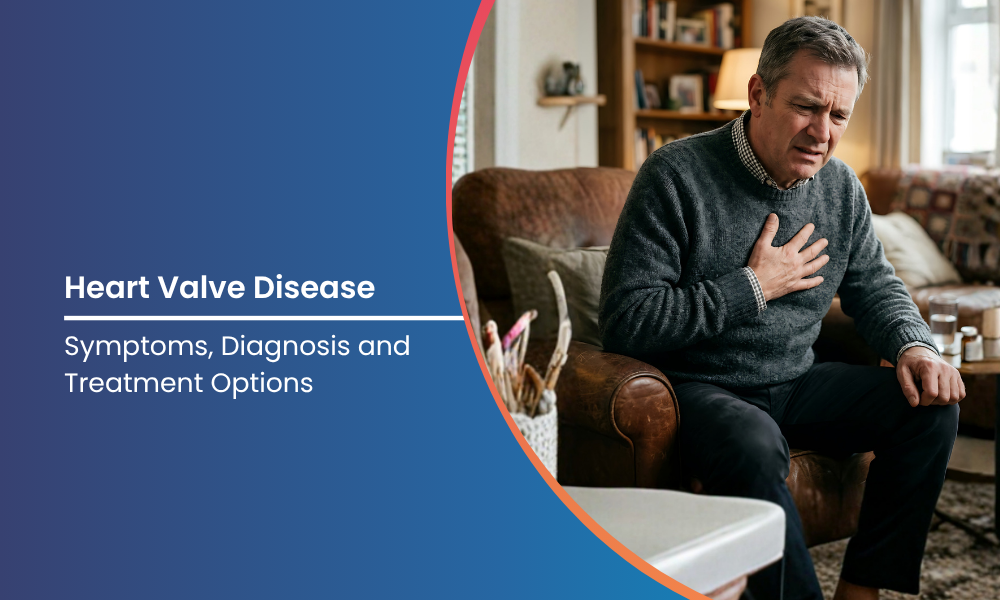
Shortness of breath during activity or while lying down
Fatigue and reduced ability to perform daily activities
Chest discomfort
Dizziness or light-headedness
Fainting episodes
Swelling in the feet, ankles or legs
Irregular heartbeat or palpitations
Reduced exercise tolerance
These symptoms can overlap with other heart conditions. A medical evaluation is important to determine the exact cause.
When Should You Seek Medical Attention?
Medical consultation is recommended when symptoms such as breathlessness, chest discomfort, dizziness or unexplained fatigue occur, especially if they affect daily activities.
Urgent medical attention may be needed when there are symptoms such as
Severe breathing difficulty
Sudden chest pain
Loss of consciousness
Rapid worsening of symptoms
Early evaluation can help identify heart valve problems before they lead to serious complications.
Causes of Heart Valve Disease
Several factors can cause heart valve disease. The cause varies by valve and the individual’s medical history.
Age-Related Valve Changes
As people age, heart valves may stiffen or change structurally. These changes can affect how effectively valves open and close.
Congenital Heart Valve Conditions
Some individuals are born with abnormal heart valves. Congenital valve problems may affect valve structure and function from childhood or may become noticeable later in life.
Infections Affecting Heart Valves
Certain infections can damage heart valves. Conditions that affect the heart's inner lining may also affect valve function.
Rheumatic Heart Disease
Rheumatic heart disease can develop after certain untreated infections and may cause long-term damage to heart valves.
Other Cardiovascular Conditions
Conditions that affect heart muscle function or blood pressure may contribute to changes in valve performance.
Risk Factors for Heart Valve Disease
Several factors may increase the likelihood of developing heart valve problems.
Increasing Age
Older adults face a higher risk of certain valve conditions because of natural changes in heart structures.
History of Heart Conditions
Previous heart conditions may influence valve health and overall cardiac function.
Previous Infections
Certain infections can affect heart tissues and valves.
Family History
Some structural heart conditions may have a genetic component.
High Blood Pressure and Other Health Conditions
Long-term cardiovascular stress may change heart function and valve performance.
Diagnosis of Heart Valve Disease
Diagnosis begins with a detailed medical assessment. A cardiologist evaluates symptoms, medical history and physical findings before recommending appropriate tests.
Physical Examination
During the examination, doctors may listen to heart sounds using a stethoscope. Changes in heart sounds may suggest valve abnormalities.
Echocardiography
Echocardiography is one of the most important tests for evaluating heart valves. It uses ultrasound technology to create images of the heart and helps assess valve movement, blood flow and heart function.
Electrocardiogram (ECG)
An ECG records the heart's electrical activity. It may help identify rhythm changes associated with heart conditions.
Chest Imaging
Imaging tests may show heart size and surrounding structures.
Cardiac MRI or CT Imaging
Advanced imaging methods may be recommended in selected cases to provide detailed information about heart structure and valve function.
Heart Valve Disease Treatment Options
Treatment depends on the type of valve problem, severity of symptoms, heart function and overall health condition.
The goal of treatment is to manage symptoms, improve quality of life and reduce the risk of complications.
Regular Monitoring
Some mild valve problems may only require regular follow-up with a cardiologist. Periodic testing helps monitor whether the condition is changing over time.
Medications
Medicines may help manage symptoms or reduce strain on the heart. However, medications do not repair a damaged valve.
Doctors may prescribe medicines based on individual needs, including those that help control blood pressure, fluid balance, or heart rhythm.
Lifestyle Management
Healthy lifestyle practices can support overall heart health. These may include:
Following a balanced diet
Maintaining recommended physical activity levels
Managing blood pressure
Avoiding tobacco exposure
Attending regular medical follow-ups
Valve Replacement Surgery
When a severely damaged heart valve affects heart function, doctors may recommend valve replacement surgery.
Valve replacement surgery replaces the damaged valve with an artificial or biological valve substitute.
The decision for surgery depends on several factors, including
Severity of valve disease
Symptoms
Heart function
Age and overall health
Risks and benefits of the procedure
Types of Valve Replacement Surgery
Surgical Valve Replacement
Traditional valve replacement surgery is performed through open-heart surgery. Surgeons remove the damaged valve and replace it with a new one.
Transcatheter Valve Procedures
Some patients may be candidates for minimally invasive valve procedures in which a replacement valve is delivered through a catheter-based approach.
The choice of procedure depends on individual medical assessment.
Cardiac Surgery Approach for Valve Disorders
Cardiac surgeons and cardiology specialists work together to determine the most appropriate treatment plan for patients with valve disease.
A comprehensive approach may include:
Detailed diagnostic evaluation
Assessment of surgical suitability
Selection of appropriate treatment method
Post-procedure monitoring
Long-term follow-up care
Modern cardiac care focuses on personalized treatment decisions based on each patient’s condition.
Recovery After Valve Replacement Surgery
Recovery after valve surgery varies depending on the type of procedure, overall health and individual healing process.
Patients may receive guidance regarding:
Gradual return to physical activity
Medication management
Follow-up appointments
Heart health monitoring
Regular follow-up helps doctors assess valve function and overall cardiac recovery.
Importance of Follow-Up Care
Heart valve disease requires ongoing medical care even after treatment. Regular follow-up lets healthcare professionals monitor heart function and catch changes early.
Patients should follow medical advice regarding:
Routine cardiac evaluations
Prescribed medications
Lifestyle recommendations
Symptoms that require attention
Preventing Heart Valve Problems
Not all heart valve diseases are preventable, but certain measures can support heart health.
Maintain Heart-Healthy Habits
Regular physical activity, balanced nutrition and management of cardiovascular risk factors can support overall heart function.
Treat Infections Promptly
Following appropriate medical advice for infections may help reduce the risk of complications.
Regular Health Checkups
Routine medical evaluations can help identify cardiovascular concerns early, especially for individuals with risk factors.
Frequently Asked Questions
1. What are the common symptoms of heart valve disease?
Common symptoms include shortness of breath, fatigue, chest discomfort, dizziness, swelling in the legs and irregular heartbeat.
2. What causes heart valve problems?
Heart valve problems may occur due to aging, congenital conditions, infections, rheumatic heart disease and other cardiovascular factors.
3. Can heart valve disease be treated without surgery?
Some valve conditions can be managed with monitoring and medications. However, severe valve damage may require procedures such as valve replacement surgery.
4. What is valve replacement surgery?
Valve replacement surgery replaces a damaged heart valve with an artificial or biological valve to improve blood flow through the heart.
5. How is heart valve disease diagnosed?
Diagnosis may include physical examination, echocardiography, ECG and advanced imaging tests when required.
6. Is heart valve disease serious?
The seriousness depends on the type and severity of valve damage. Early diagnosis and appropriate treatment can help manage many valve conditions effectively.
7. Can heart valve disease occur in young people?
Yes, although some valve problems are more common with age. Congenital conditions and other causes can affect younger individuals.
8. How long does recovery take after valve replacement surgery?
Recovery varies by procedure type and individual health factors. Doctors provide personalized guidance during follow-up care.
9. Does medication repair a damaged heart valve?
Medications can help manage symptoms and reduce strain on the heart but they generally do not repair structural valve damage.
10. Which doctor treats heart valve disease?
A team may manage heart valve disease, including cardiologists and cardiothoracic surgeons, depending on the condition and treatment needs.