Bone Marrow Transplant Types Eligibility and Procedure
Overview
A bone marrow transplant can be an important treatment option for people with certain blood cancers, bone marrow disorders, and inherited blood conditions. For patients and families facing a serious diagnosis, understanding the procedure can help them prepare for discussions with their medical team.
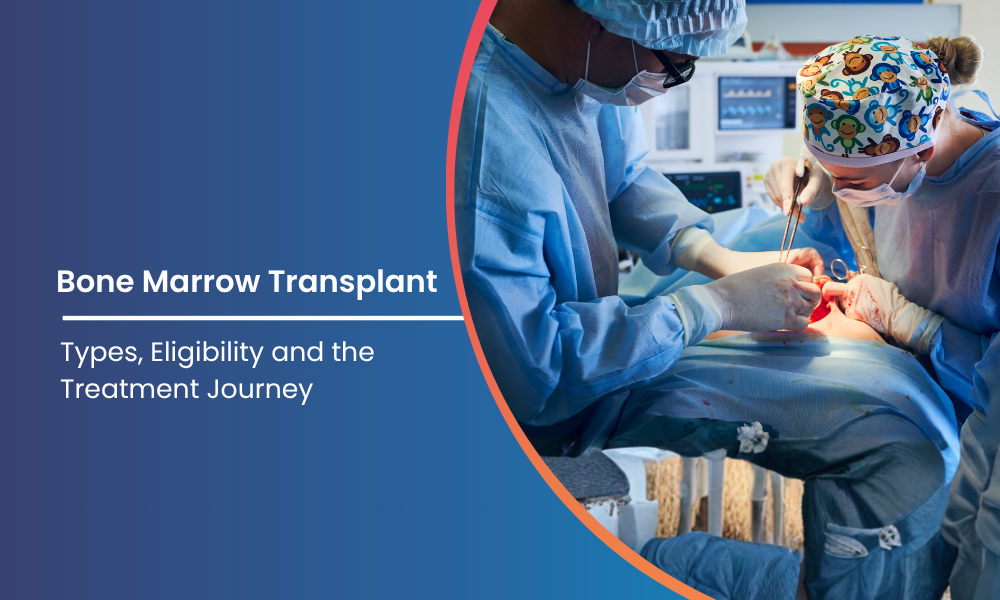
A bone marrow transplant (BMT), also known as a haematopoietic stem cell transplant, involves giving a patient healthy blood-forming stem cells when their bone marrow is damaged, diseased, or affected by intensive treatment.
Doctors may consider the procedure for selected patients with leukaemia, lymphoma, multiple myeloma, aplastic anaemia, thalassaemia, and certain other conditions.
However, not everyone diagnosed with these diseases needs a transplant. The decision depends on the specific diagnosis, disease severity, previous treatment, overall health, and availability of suitable stem cells.
Understanding the different types of bone marrow transplants, transplant eligibility, evaluation processes, and recovery requirements can help patients make informed decisions.
This guide explains the BMT procedure, the role of stem cell transplantation, donor matching, possible complications, and what patients can expect throughout the treatment journey.
What Is a Bone Marrow Transplant?
Bone marrow is the soft, spongy tissue found inside certain bones. It contains blood-forming stem cells that produce the body's essential blood cells.
These include:
Red blood cells: Carry oxygen throughout the body.
White blood cells: Help the immune system fight infections.
Platelets: Help blood clot and control bleeding.
Certain diseases can interfere with the bone marrow's ability to produce healthy blood cells.
In other situations, intensive chemotherapy or radiation treatment may damage the bone marrow while treating an underlying disease.
A stem cell transplant helps restore blood cell production by introducing healthy blood-forming stem cells into the patient's bloodstream.
These cells travel to the bone marrow, where they may establish themselves and begin producing new blood cells.
Although commonly called a bone marrow transplant, modern stem cells may come from bone marrow, circulating blood, or donated umbilical cord blood.
Is Bone Marrow Transplant the Same as Stem Cell Transplant?
The terms are closely related and are often used interchangeably.
A bone marrow transplant traditionally refers to transplantation using stem cells collected directly from bone marrow.
'Stem cell transplant' is the broader term, covering blood-forming stem cells obtained from different sources.
The underlying objective is similar: to restore or replace blood-forming stem cells.
The most suitable stem cell source depends on the disease, transplant type, donor characteristics, and clinical circumstances.
What Are the Different Types of Bone Marrow Transplant?
Bone marrow transplants are primarily classified by where the transplanted stem cells come from.
1. Autologous Stem Cell Transplant
An autologous transplant uses the patient's own blood-forming stem cells.
Before intensive treatment, clinicians collect and store stem cells. The patient then receives high-dose chemotherapy, followed by the return of the stored stem cells.
This helps restore blood cell production after treatment.
Autologous transplantation may be considered for selected patients with:
Multiple myeloma
Certain types of lymphoma
Some other cancers in specific circumstances
Because the stem cells come from the patient, donor matching is unnecessary, and graft-versus-host disease is not a typical complication.
However, an autologous transplant does not provide the donor immune-system effect that may help control certain blood cancers after an allogeneic transplant.
2. Allogeneic Stem Cell Transplant
An allogeneic transplant uses stem cells obtained from another person.
The donor may be a matched family member, an unrelated volunteer donor, or a partially matched family member.
Before transplantation, the medical team evaluates the compatibility between the patient's tissues and the donor's cells.
Allogeneic transplantation may be considered for selected patients with leukaemia, myelodysplastic syndromes, severe aplastic anaemia, thalassaemia, and certain inherited or immune disorders.
An important potential benefit is the graft-versus-leukaemia effect, in which donor immune cells help attack remaining cancer cells.
However, allogeneic transplantation also carries risks, including graft-versus-host disease and graft failure.
3. Haploidentical Stem Cell Transplant
A haploidentical transplant is an allogeneic transplant that uses a partially matched family donor.
A parent, child, or certain siblings may be considered as potential donors.
Developments in transplant approaches have made this option possible for some patients who do not have a fully matched donor.
The suitability of a haploidentical transplant depends on clinical factors and the transplant team's assessment.
4. Umbilical Cord Blood Transplant
Stem cells can also be obtained from umbilical cord blood collected and stored after childbirth.
Cord blood transplantation may be considered when an appropriate stem cell source is needed.
Its advantages and limitations depend on factors such as cell availability, compatibility, and the patient's size and medical condition.
5. Syngeneic Stem Cell Transplant
A syngeneic transplant uses stem cells from an identical twin.
It is relatively uncommon because it requires an identical twin donor.
Which Diseases May Require a Bone Marrow Transplant?
A BMT procedure may be used for selected malignant and non-malignant conditions.
Transplantation is not automatically recommended for every patient with these diagnoses.
Leukaemia
Leukaemia affects blood-forming tissues and can interfere with normal blood cell production.
Some patients with acute myeloid leukaemia or acute lymphoblastic leukaemia may benefit from an allogeneic transplant, depending on disease risk, response to treatment, and other factors.
Lymphoma
Certain patients with Hodgkin lymphoma or non-Hodgkin lymphoma may be considered for stem cell transplantation.
The choice depends on the lymphoma subtype, previous treatment, disease response, and available alternatives.
Multiple Myeloma
Autologous stem cell transplantation remains an established treatment option for eligible patients with multiple myeloma.
It is generally used as part of a broader treatment strategy rather than as a guaranteed cure.
Aplastic Anaemia
Severe aplastic anaemia occurs when bone marrow does not produce enough blood cells.
Allogeneic stem cell transplantation may be considered depending on age, disease severity, donor availability, and other clinical circumstances.
Thalassaemia
Some transfusion-dependent thalassaemia patients may be candidates for allogeneic stem cell transplantation.
Eligibility depends on factors such as organ health, previous treatment, donor compatibility, and anticipated transplant risks.
Sickle Cell Disease and Certain Inherited Disorders
Stem cell transplantation may be an option for selected patients with severe sickle cell disease and certain inherited immune or metabolic disorders.
Specialists evaluate the potential benefits, risks, and available alternative treatments.
Who Is Eligible for a Bone Marrow Transplant?
A specialist team determines bone marrow transplant eligibility, not diagnosis or age alone.
Doctors assess whether the potential benefits of transplantation outweigh the immediate and long-term risks.
Type and Stage of Disease
The underlying disease is one of the most important considerations.
For some patients, transplantation may offer a valuable treatment option. For others, medication, targeted therapy, immunotherapy, or other approaches may be more appropriate.
Response to Previous Treatment
The transplant team considers how the disease has responded to chemotherapy or other treatment.
In certain blood cancers, disease remission and measurable residual disease results may influence treatment planning.
Overall Health and Organ Function
Transplantation can place substantial demands on the body.
Doctors assess heart, lung, liver, and kidney function to determine whether the patient is likely to tolerate the procedure and associated treatment.
Age and Physical Fitness
Age can influence transplant risks, but no single age limit applies to every patient and transplant approach.
Physical fitness, existing illnesses, and the intensity of planned treatment are also important considerations.
Donor Availability
For allogeneic transplantation, doctors must identify an appropriate donor source for stem cells.
If a fully matched family donor is unavailable, doctors may consider other donor options.
Infection Status and Other Medical Conditions
Active infections and certain uncontrolled medical conditions may increase transplant risks.
The team evaluates these concerns before deciding whether and when transplantation should proceed.
Ability to Attend Long-Term Follow-Up
BMT requires ongoing monitoring, medication adherence, infection precautions, and recovery support.
The care team discusses these practical requirements before treatment.
How Is Bone Marrow Transplant Eligibility Evaluated?
A thorough pre-transplant assessment helps the medical team determine whether transplantation is appropriate.
Step-by-Step BMT Evaluation Process
Step 1: Diagnosis and Medical Record Review
The specialist reviews the patient's diagnosis, treatment history, laboratory investigations, and previous response to therapy.
This helps establish whether transplantation is a suitable treatment option.
Step 2: Blood and Bone Marrow Investigations
Depending on the disease, tests may include a complete blood count, bone marrow examination, molecular studies, and other investigations.
These findings help determine disease status.
Step 3: Organ Function Assessment
The team evaluates heart, lung, kidney, and liver function.
Additional tests may be required depending on previous treatment and existing conditions.
Step 4: HLA Typing and Donor Search
For allogeneic transplantation, human leukocyte antigen (HLA) testing helps assess donor compatibility.
Potential donors may include siblings, other relatives, or unrelated volunteers.
Step 5: Infection Screening and General Health Assessment
The team evaluates infection-related risks, nutritional status, medications, and other factors that may affect transplantation.
Step 6: Treatment Planning and Counselling
The specialist explains the proposed transplant approach, possible benefits, complications, recovery expectations, and alternatives.
Patients and families can discuss questions before making an informed treatment decision.
Understanding HLA Matching for Bone Marrow Transplant
HLA stands for human leukocyte antigen.
These markers help the immune system distinguish between the body's own cells and foreign cells.
In allogeneic transplantation, HLA compatibility matters because donor cells must establish themselves in the recipient's body.
A closer match may reduce certain transplant risks, although the relationship between matching and outcomes depends on the transplant approach.
Can a Family Member Donate Bone Marrow?
Yes. Siblings and other family members may be evaluated as potential donors.
However, being related does not automatically mean that someone is an appropriate donor.
HLA testing and medical assessment are needed.
What If No Fully Matched Donor Is Available?
The transplant team may consider alternatives such as:
A matched unrelated donor
A partially matched family donor
Umbilical cord blood stem cells
The availability and suitability of each option depend on the patient's medical circumstances.
Bone Marrow Transplant Procedure: The Treatment Journey
A stem cell transplant is not a single-day treatment. It involves several stages, from preparation to recovery and long-term monitoring.
Stage 1: Pre-Transplant Preparation
Before treatment, patients undergo medical evaluation and counselling.
The team may discuss fertility preservation, infection risks, nutritional needs, expected hospital stay, and practical recovery arrangements.
The team may place a central venous catheter to administer treatment, blood products, and stem cells.
Stage 2: Stem Cell Collection
The collection process depends on the stem cell source.
For some transplants, stem cells are collected from circulating blood using a specialised process called apheresis.
In other situations, doctors collect stem cells from bone marrow under anaesthesia.
Cord blood stem cells may come from a previously collected and stored donation.
The transplant team selects the appropriate source based on the treatment plan.
Stage 3: Conditioning Treatment
Before receiving transplanted stem cells, the patient undergoes a preparative treatment called conditioning.
This may involve chemotherapy, radiation therapy, or a combination of treatments.
Conditioning may help control the underlying disease, suppress the immune system, and create conditions that allow transplanted cells to establish themselves.
The intensity varies depending on the disease, transplant type, age, and other clinical factors.
Some patients receive reduced-intensity conditioning.
Stage 4: Stem Cell Infusion
Stem cell infusion is commonly called Day 0.
Clinicians administer the collected stem cells through an intravenous line, a process that resembles a blood transfusion.
The transplanted cells circulate through the bloodstream and travel to the bone marrow.
The infusion itself generally does not involve surgically inserting cells into the recipient's bones.
Stage 5: Engraftment and Early Recovery
After transplantation, doctors monitor whether the infused stem cells begin producing new blood cells.
This process is called engraftment.
During early recovery, patients may have very low blood cell counts and be particularly vulnerable to infections, bleeding, and other complications.
Supportive treatment may include blood transfusions, medications, nutritional support, and close clinical monitoring.
Engraftment timing varies by transplant type, stem cell source, and individual factors.
Stage 6: Discharge and Continuing Care
Discharge planning depends on the patient's condition, blood count recovery, complications, and ability to receive suitable follow-up care.
After discharge, patients generally require frequent assessments and strict adherence to their transplant team's instructions.
Appointment frequency gradually changes depending on recovery and medical needs.
What Are the Possible Risks of Bone Marrow Transplant?
Bone marrow transplantation is a complex treatment that can cause serious complications.
The likelihood and severity of these complications vary from patient to patient.
Infection
Conditioning treatment and delayed immune recovery can increase vulnerability to bacterial, viral, and fungal infections.
Patients receive individualised infection-prevention advice and close monitoring.
Bleeding and Anaemia
Low blood cell counts may increase bleeding risk, fatigue, and weakness.
Some patients require blood or platelet transfusions during recovery.
Graft-versus-Host Disease
Graft-versus-host disease (GVHD) is a possible complication of allogeneic transplantation.
It occurs when donor immune cells react against the recipient's tissues.
GVHD may affect the skin, digestive system, liver, and other organs.
It can be acute or chronic and may require long-term treatment.
Graft Failure
Sometimes transplanted cells do not produce enough blood cells.
This is called graft failure and may require additional medical intervention.
Organ Complications
Transplant-related treatment can sometimes affect the lungs, liver, kidneys, heart, or other organs.
Careful assessment and monitoring help identify complications.
Long-Term Health Effects
Potential late effects may include fertility problems, hormonal changes, bone health concerns, cataracts, or secondary cancers.
Patients should discuss both short-term and long-term risks with their transplant specialist.
Recovery and Follow-Up After a Stem Cell Transplant
Recovery after transplantation varies considerably from person to person.
Blood counts may recover before the immune system has fully recovered.
For some patients, immune recovery takes many months. After allogeneic transplantation, it can take one or two years or longer, especially if complications occur.
Infection Prevention
Patients may receive advice on hand hygiene, avoiding infection exposure, food safety, and when to contact the transplant team.
Precautions should be individualised.
Medication Management
The transplant team may prescribe medicines to prevent or treat infections and, after certain allogeneic transplants, reduce the risk of GVHD.
Take medications according to the transplant team's instructions.
Nutrition and Physical Recovery
A balanced nutritional plan supports recovery.
Some patients may require dietitian guidance because of reduced appetite, digestive symptoms, or treatment-related nutritional difficulties.
Gentle physical activity and rehabilitation may be introduced as medically appropriate.
Long-Term Monitoring
Follow-up may involve:
Complete blood counts
Kidney and liver function tests
Infection monitoring
Assessment of disease response or recurrence
Monitoring for graft-versus-host disease
Review of medications and vaccinations
Screening for late treatment effects
The transplant team determines when to give vaccinations and other preventive measures.
When Should Patients Seek Medical Help After BMT?
Patients should follow their transplant team's specific emergency contact instructions.
Contact the transplant team immediately if symptoms such as fever, chills, new cough, diarrhoea, a new rash, unusual bruising, or persistent vomiting develop.
In particular, a temperature of 38°C or higher is commonly treated as an urgent warning sign after transplantation, although individual centres may provide different thresholds.
Seek emergency care for severe breathing difficulty, chest pain, confusion, uncontrolled bleeding, or other rapidly worsening symptoms.
Because transplant recipients can develop serious infections or complications, patients should not delay assessment while attempting to manage concerning symptoms at home.
What Questions Should You Ask Before a Bone Marrow Transplant?
An informed discussion with the transplant specialist is essential to treatment planning.
Patients and caregivers may wish to ask:
Why is a bone marrow transplant being considered for my condition?
Which transplant type is recommended, and why?
Are there suitable alternatives to transplantation?
What tests are needed to assess eligibility?
Will a donor be required?
What are the most important risks in my individual case?
How long might hospital care and recovery take?
What follow-up support will be necessary?
Could treatment affect fertility or long-term health?
What symptoms should prompt urgent medical attention?
The answers depend on the patient's diagnosis, treatment history, transplant approach, and overall health.
Bone Marrow Transplant Assessment at ShardaCare – Healthcity
Patients diagnosed with certain blood cancers, bone marrow disorders, or inherited blood conditions may need specialist assessment to determine whether stem cell transplantation should be considered.
A BMT consultation can help patients understand their treatment options, required investigations, donor-related considerations, and the potential benefits and risks of transplantation.
The decision to proceed should always involve an individualised evaluation and discussion with an appropriately qualified specialist.
Patients seeking information about BMT assessment can contact ShardaCare – Healthcity to enquire about specialist consultation and available services.
For an assessment, contact ShardaCare – Healthcity on 73000 40000.
Frequently Asked Questions About Bone Marrow Transplant
1. What is a bone marrow transplant?
A bone marrow transplant is a medical procedure that provides healthy blood-forming stem cells to restore or replace a patient's blood cell production. It may treat selected blood cancers, bone marrow failure conditions, and inherited disorders.
2. Is a bone marrow transplant a surgery?
For the recipient, doctors generally infuse stem cells through an intravenous line rather than surgically placing them into the bones. However, collecting bone marrow from a donor is a separate procedure that may require anaesthesia.
3. What is the difference between autologous and allogeneic BMT?
An autologous transplant uses the patient's own stem cells, while an allogeneic transplant uses donor stem cells. The choice depends on the underlying disease, treatment goals, and clinical circumstances.
4. Who is eligible for a stem cell transplant?
Eligibility depends on diagnosis, disease stage, response to prior treatment, organ function, overall health, and transplant-related risks. Donor availability is an additional consideration for allogeneic transplantation.
5. Can a parent donate stem cells to their child?
A parent may be considered a potential donor, often through a haploidentical transplant approach. Appropriate donor testing and medical assessment are necessary before proceeding.
6. Is bone marrow transplant painful?
The stem cell infusion itself is generally similar to receiving an intravenous transfusion. However, conditioning treatment and recovery may cause discomfort or side effects that require medical care.
7. How long does a bone marrow transplant take?
The transplant process includes preparation, conditioning, stem cell infusion, engraftment, and recovery. The overall treatment journey can take several months, and long-term follow-up continues beyond that.
8. What is engraftment after BMT?
Engraftment occurs when transplanted stem cells establish themselves in the bone marrow and begin producing new blood cells. Doctors monitor blood counts to assess this process.
9. What are the major risks of stem cell transplantation?
Risks may include infections, bleeding, organ complications, graft failure, and long-term treatment effects. Graft-versus-host disease is an additional concern after allogeneic transplantation.
10. Can a bone marrow transplant cure leukaemia?
Allogeneic stem cell transplantation may offer curative potential for selected patients with certain types of leukaemia. However, outcomes vary, and transplantation does not guarantee a cure.
11. Is a fully matched donor always necessary?
Not always. In some cases, a partially matched family donor, unrelated donor, or cord blood source may be appropriate. Donor selection depends on transplant-specific factors.
12. When should someone consult a BMT specialist?
Specialist consultation may be appropriate when a haematologist identifies transplantation as a possible treatment for a blood cancer, bone marrow disorder, or inherited blood condition. Assessment helps determine whether transplantation is suitable and how it compares with alternative treatments.