


Non-Invasive Cardiology
Coronary Artery Disease (CAD)
Valvular Heart Disease
Cardiomyopathies
Arrhythmia Management
Heart Failure Management
Preventive Screening
Cardiac Sciences
Aortic Aneurysm Symptoms Risks and Treatment Guide
15 Sept 2026
Overview
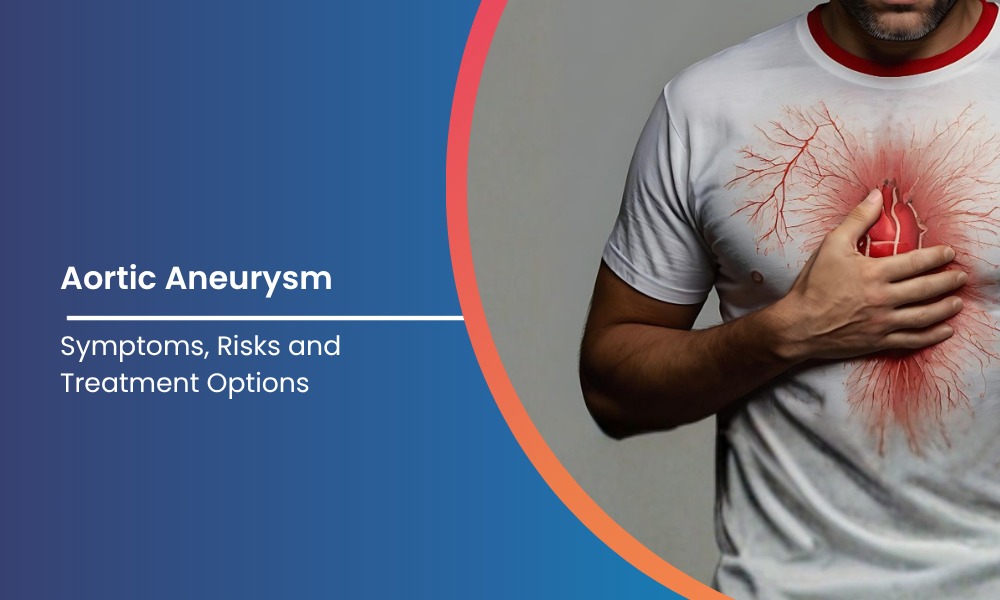
An aortic aneurysm is an abnormal enlargement or weakening of a section of the aorta, the body's largest artery. Because the aorta carries blood from the heart to the rest of the body, problems affecting its wall can become serious if an aneurysm grows, leaks, or ruptures.
Aortic aneurysms can develop in different parts of the aorta. An aneurysm in the abdomen is called an abdominal aortic aneurysm (AAA), while one affecting the chest is called a thoracic aortic aneurysm (TAA). Some aneurysms cause no noticeable symptoms and are discovered during imaging performed for another reason. Others may cause chest, abdominal, or back discomfort.
Understanding aortic aneurysm symptoms, risk factors, diagnosis, and treatment options can help patients seek appropriate medical attention. Treatment depends on factors such as the aneurysm's location, size, growth rate, symptoms, shape, underlying cause, and overall health.
Aortic aneurysm care may involve vascular and cardiothoracic specialists alongside Non Invasive Cardiology, Interventional Cardiology, imaging specialists, and Cardiac Anaesthesia professionals when a procedure is required. This multidisciplinary approach helps doctors assess cardiovascular health, determine treatment suitability, and plan care around the individual patient's needs.
What Is an Aortic Aneurysm?
An aortic aneurysm occurs when a section of the aortic wall becomes abnormally enlarged or weakened.
The aorta extends from the heart through the chest and into the abdomen before dividing into major arteries supplying the lower body. An aneurysm can therefore develop in several locations.
The two broad categories are:
Abdominal Aortic Aneurysm
An abdominal aortic aneurysm develops in the portion of the aorta that passes through the abdomen.
Some abdominal aneurysms remain small and stable for years, while others gradually enlarge. The risk of complications generally increases as an aneurysm becomes larger, although size is not the only consideration.
Thoracic Aortic Aneurysm
A thoracic aortic aneurysm develops in the chest. It may involve the aortic root, ascending aorta, aortic arch, or descending thoracic aorta.
Thoracic aneurysms can be associated with conditions such as bicuspid aortic valve disease, inherited connective-tissue disorders, or other diseases affecting the aortic wall.
Treatment planning for thoracic aneurysms may require collaboration between cardiologists and cardiothoracic or vascular specialists.
Aortic Aneurysm Symptoms
Many aortic aneurysms do not cause symptoms until they become larger or develop complications. This is why an aneurysm may sometimes be identified incidentally during imaging.
When symptoms occur, they depend partly on the aneurysm's location.
Abdominal Aortic Aneurysm Symptoms
Possible abdominal aortic aneurysm symptoms include:
Persistent or recurrent abdominal discomfort
Back pain
A feeling of pressure in the abdomen
A pulsating sensation in the abdomen
Flank discomfort
An abdominal aneurysm can sometimes cause symptoms by pressing against nearby structures.
New, severe, or unexplained abdominal or back pain in someone known to have an aneurysm requires urgent medical assessment.
Thoracic Aortic Aneurysm Symptoms
Thoracic aneurysms may remain silent, but some patients can experience:
Chest discomfort
Upper back pain
Shortness of breath
Cough
Difficulty swallowing
Hoarseness
These symptoms can have many causes and do not necessarily mean that an aneurysm is present. Medical assessment is important when symptoms are persistent, unexplained, or severe.
What Causes an Aortic Aneurysm?
Aortic aneurysms can develop when the structure and strength of the aortic wall become compromised.
Potential contributing factors include:
Increasing age
High blood pressure
Smoking
Atherosclerotic disease
Family history
Genetic conditions
Bicuspid aortic valve
Certain connective-tissue disorders
Previous injury or surgery involving the aorta
Certain inflammatory or infectious diseases
Not every person with these risk factors develops an aneurysm, and an aneurysm can occasionally develop without an obvious single cause.
Genetic and Family Risk
Some thoracic aortic aneurysms are associated with inherited conditions affecting connective tissue or the structure of the aorta.
People with certain genetic conditions or a strong family history of aortic aneurysm or dissection may require more specialised assessment and ongoing imaging.
Family history should therefore be discussed with a healthcare professional, particularly when multiple relatives have experienced aneurysms or aortic disease at relatively young ages.
Risk Factors for Aortic Aneurysm
Several factors can increase the likelihood of developing an aortic aneurysm.
Increasing Age
The likelihood of abdominal aortic aneurysm generally increases with age.
Smoking
Smoking is an important modifiable risk factor associated with abdominal aortic aneurysm development and progression.
Stopping smoking is therefore an important part of vascular health.
High Blood Pressure
Persistent high blood pressure can place additional stress on arterial walls.
People with known aortic disease should discuss appropriate blood-pressure targets and treatment with their healthcare team.
Family History
Family history can be particularly relevant in thoracic aortic disease.
Cardiovascular Disease
Atherosclerosis and other cardiovascular conditions may coexist with abdominal aortic aneurysm and other forms of vascular disease.
This is one reason cardiovascular assessment can be an important part of comprehensive aneurysm care.
How Is an Aortic Aneurysm Diagnosed?
Aortic aneurysms are diagnosed using medical imaging.
The appropriate investigation depends on the suspected location and the patient's symptoms.
Ultrasound
Abdominal ultrasound is commonly used to identify and monitor abdominal aortic aneurysms. It is non-invasive and does not use ionising radiation.
CT Scan
CT can provide detailed images of the aorta and surrounding structures.
CT angiography may be particularly useful when doctors need detailed anatomical information for treatment planning.
MRI
MRI can provide detailed images of the aorta without ionising radiation and may be appropriate for selected patients.
Echocardiography
Echocardiography can evaluate the heart, aortic root, ascending aorta, and aortic valve.
A Non Invasive Cardiology assessment may be particularly useful when doctors need to evaluate cardiac structure and function alongside an aortic condition.
Depending on the patient's condition, echocardiography may help assess:
Heart pumping function
Aortic valve structure
Aortic root dimensions
Ascending aorta
Other structural heart abnormalities
Role of Non Invasive Cardiology in Aortic Aneurysm Care
Non Invasive Cardiology can contribute to the evaluation of patients with aortic disease by using diagnostic techniques such as echocardiography and other non-invasive cardiovascular investigations.
Cardiologists may assess whether an aneurysm is associated with:
Aortic valve abnormalities
Bicuspid aortic valve
Changes in cardiac function
Other cardiovascular conditions
This information can be valuable when determining the patient's overall cardiovascular status and planning further management.
Non-invasive evaluation does not itself treat an aneurysm. Instead, it provides important information that helps the wider medical team understand the patient's cardiovascular condition.
Why Regular Aneurysm Monitoring Matters
Finding an aneurysm does not automatically mean surgery is required.
Small or stable aneurysms may be monitored with periodic imaging. The purpose of surveillance is to determine whether the aneurysm is growing and whether its size or other characteristics indicate that treatment should be considered.
Monitoring schedules vary according to:
Aneurysm size
Location
Growth rate
Shape
Underlying cause
Family history
Associated cardiovascular conditions
Patients should follow the surveillance schedule recommended by their treating specialist.
When Does an Aortic Aneurysm Need Treatment?
There is no single treatment threshold that applies to every aneurysm.
Doctors consider the balance between the potential risk associated with the aneurysm and the risks associated with an intervention.
Factors considered may include:
Maximum aneurysm diameter
Rate of growth
Symptoms
Location
Aneurysm shape
Genetic condition
Family history
Age
General health
Anatomical suitability for repair
Symptoms or rapid enlargement can sometimes influence treatment decisions even when an aneurysm has not reached a commonly used size threshold.
Treatment decisions should therefore be individualised.
Aortic Aneurysm Treatment Options
Treatment can involve surveillance and medical management, open surgery, or endovascular repair.
Medical Management and Surveillance
Small aneurysms that do not currently require repair may be managed through:
Regular imaging
Blood-pressure control
Smoking cessation
Diabetes management
Appropriate physical activity
Management of other cardiovascular conditions
Medical treatment generally does not eliminate an established aneurysm. Instead, it aims to reduce cardiovascular risk and monitor the aneurysm appropriately.
Role of Interventional Cardiology
Interventional Cardiology focuses on minimally invasive catheter-based procedures used to diagnose and treat selected cardiovascular conditions.
Although many aortic aneurysms are managed primarily by vascular or cardiothoracic specialists, patients with complex cardiovascular disease may benefit from multidisciplinary evaluation involving Interventional Cardiology.
Depending on the individual clinical situation, an interventional cardiologist may contribute to the broader cardiovascular assessment and management of associated heart or blood-vessel conditions.
It is important to distinguish catheter-based cardiac procedures from endovascular aneurysm repair. Endovascular aneurysm repair is a specific treatment for suitable aortic aneurysms and is generally performed by appropriately trained vascular or aortic specialists.
The appropriate specialist and procedure depend on the anatomy and diagnosis.
Open Aortic Aneurysm Surgery
Open repair involves surgically accessing the affected portion of the aorta and replacing or reinforcing the diseased section with a graft.
Open surgery may be considered depending on:
Aneurysm location
Size
Symptoms
Anatomy
Suitability for endovascular repair
Overall surgical risk
Open aortic surgery can be a major procedure and requires detailed preoperative evaluation.
For selected aneurysms involving the aortic root or ascending aorta, open surgery may be an important treatment option.
Role of Cardiac Anaesthesia in Aortic Surgery
Cardiac Anaesthesia is an important component of care when patients undergo major cardiac or aortic procedures requiring specialised anaesthetic management.
Cardiac anaesthesia teams work alongside surgeons and other specialists to support patients before, during, and after complex cardiovascular procedures.
Depending on the procedure, cardiac anaesthetic care may involve careful monitoring of:
Heart function
Blood pressure
Oxygenation
Circulation
Fluid balance
Temperature
Other critical physiological parameters
Preoperative assessment helps the team understand the patient's cardiovascular condition, other medical problems, medications, and potential anaesthetic risks.
During complex aortic surgery, close coordination between the surgical, anaesthesia, perfusion, intensive-care, and cardiology teams is essential.
The specific anaesthetic approach depends on the procedure and the patient's clinical condition.
Endovascular Aneurysm Repair
Endovascular aneurysm repair involves using a catheter-based approach to place a stent graft within the affected section of the aorta.
For selected abdominal and descending thoracic aneurysms, an endovascular approach may provide an alternative to open surgery.
Potential advantages may include:
Smaller access incisions
Less invasive treatment
Potentially shorter initial recovery for appropriate patients
However, endovascular treatment is not suitable for every aneurysm.
Doctors must evaluate:
Aneurysm location
Aortic anatomy
Blood-vessel access
Aneurysm shape
Landing zones for the graft
Other anatomical factors
Patients undergoing endovascular aneurysm repair require ongoing follow-up because complications can occur after treatment.
Multidisciplinary Aortic Care
Aortic aneurysm treatment often benefits from collaboration among different specialists.
Depending on the patient's condition, the care team may include:
Vascular surgeons
Cardiothoracic surgeons
Cardiologists
Non Invasive Cardiology specialists
Interventional Cardiology specialists
Cardiac Anaesthesia specialists
Radiologists
Intensivists
Rehabilitation professionals
The exact combination depends on the location and complexity of the aneurysm and the patient's overall health.
For example, a patient with an ascending aortic aneurysm and an associated valve problem may require detailed cardiac imaging and cardiology evaluation before surgery. A patient undergoing major aortic surgery may require specialised Cardiac Anaesthesia support.
What Happens After Aortic Aneurysm Repair?
Treatment does not necessarily mean that follow-up can stop.
After repair, doctors may recommend imaging to monitor:
The repaired area
The graft or stent graft
The remaining aorta
Other blood vessels
Patients who undergo endovascular repair generally require structured imaging surveillance because complications such as endoleaks, graft-related problems, or changes in the aneurysm sac can occur.
Patients who undergo open repair may also require long-term monitoring because aneurysmal disease can affect other portions of the aorta.
Aortic Aneurysm Prevention and Risk Reduction
Not every aneurysm can be prevented, particularly those associated with inherited conditions.
However, managing modifiable cardiovascular risks is important.
Stop Smoking
Stopping smoking is one of the most important steps for improving vascular health.
Control Blood Pressure
Appropriate blood-pressure management can help reduce stress on the cardiovascular system.
Manage Cholesterol and Diabetes
Controlling cholesterol and blood sugar can help reduce overall cardiovascular risk.
Maintain a Heart-Healthy Lifestyle
Regular physical activity, balanced nutrition, adequate sleep, and maintaining an appropriate weight can support cardiovascular health.
People with a known aneurysm should discuss appropriate exercise levels with their specialist before beginning strenuous or high-intensity activities.
When Is an Aortic Aneurysm an Emergency?
A ruptured aortic aneurysm is a life-threatening emergency.
Seek emergency medical attention immediately if someone with a known aneurysm develops sudden severe:
Abdominal pain
Back pain
Chest pain
Weakness
Fainting
Breathlessness
Collapse
Sudden severe chest or back pain can also occur with other acute aortic conditions, including aortic dissection.
These symptoms should never be managed at home or evaluated through a routine appointment.
Frequently Asked Questions About Aortic Aneurysm
1. What are the common aortic aneurysm symptoms?
Many aortic aneurysms cause no symptoms. When symptoms occur, they can include abdominal, back, chest, or upper-back discomfort depending on the location of the aneurysm.
2. Can an aortic aneurysm be treated without surgery?
Some small or stable aneurysms can be monitored with regular imaging and cardiovascular risk management. Whether treatment is required depends on the aneurysm and the individual patient.
3. What is the difference between an abdominal and thoracic aortic aneurysm?
An abdominal aortic aneurysm occurs in the abdominal section of the aorta, while a thoracic aortic aneurysm develops in the chest.
4. How is an aortic aneurysm diagnosed?
Doctors may use ultrasound, CT, MRI, or echocardiography depending on the location of the suspected aneurysm and the information required.
5. What is the role of Non Invasive Cardiology?
Non Invasive Cardiology can help evaluate heart structure and function using tests such as echocardiography and other non-invasive cardiovascular investigations.
6. Does Interventional Cardiology treat aortic aneurysms?
Aortic aneurysm treatment depends on the location and anatomy of the aneurysm. Interventional Cardiology may contribute to the broader cardiovascular care of selected patients, while endovascular aneurysm repair is a specialised procedure generally managed by appropriate aortic or vascular specialists.
7. What is the role of Cardiac Anaesthesia?
Cardiac Anaesthesia provides specialised anaesthetic and perioperative care for patients undergoing complex cardiac and aortic procedures.
8. When does an aneurysm require surgery?
Treatment decisions depend on factors including size, location, growth rate, symptoms, anatomy, underlying cause, family history, and overall health. There is no single threshold appropriate for every patient.
9. What is endovascular aneurysm repair?
It is a minimally invasive procedure in which a stent graft is delivered through blood vessels to reinforce the affected section of the aorta. It is suitable only for selected aneurysms.
10. Can an aortic aneurysm rupture?
Yes. A ruptured aneurysm can cause severe internal bleeding and is a medical emergency.
11. Can lifestyle changes shrink an aneurysm?
Lifestyle changes generally do not shrink an established aneurysm. They can, however, support cardiovascular health and help manage modifiable risk factors.
12. Which specialist treats an aortic aneurysm?
Depending on its location and complexity, an aneurysm may be managed by vascular surgeons, cardiothoracic surgeons, cardiologists, or a multidisciplinary aortic team.


